SIGGRAPH 1991: Tomorrow’s Realities: Virtual Reality
Conference:
Virtual Reality Chair:
- Steve E. Tice - SimGraphics
Hypermedia Chair:
- Garry Beirne - Alias | Wavefront
Subcommittee Member(s):
- M. L. Gillies
- Alan Barnum Scrivener - Human Interface Prototypes
- Mary Anne Loftus
Jury Member(s):
- William Bricken - University of Washington
- Peter Broadwell - Plasmatic Arts
- Douglas Crockford - Lucasfilm Games
- David Fox - Lucasfilm
- Thomas A. Furness III - Human Interface Technology Laboratory
- Myron W. Krueger - VideoPlace
- Brenda Laurel - Interval Research Corporation
- Michael J. Zyda - Naval Postgraduate School
- Richard J. Beach - Xerox Corporation
- Cathleen Britt - Xerox Corporation
- William (Bill) Buxton - University of Toronto
- Hugh Dubberly - Apple Inc.
- Enrique Godreau III - Xerox Corporation
Overview:
This specially designed SIGGRAPH ’91 gallery introduces attendees to the new interactive environments facilitated by dynamic interaction with advanced technologies. Here, attendees can enter networked virtual realities, explore hypermedia documents, and review displays that reveal the breadth and depth of interactive technologies.
Virtual Reality
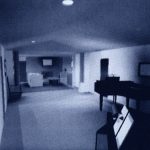
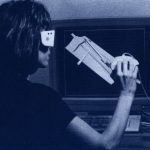
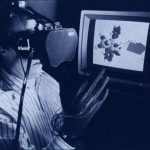
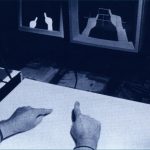
For the first time, SIGGRAPH ’91 presents a juried selection of virtual reality applications demonstrations. These systems apply a broad range of sensory inputs and outputs, and human-machine interfaces, to create virtual worlds. Although applications are the focus, new input/output devices (such as boom-supported head-mount displays) will also be demonstrated. Some systems enable participants to perform practical tasks such as medical simulation, scientific research, complex industrial design, or manufacturing assembly simulation. Others create alternative environments for entertainment, recreation, exercise, or fantasy. Some are designed for solo exploration. Others allow several participants to explore and collaborate in the same virtual reality simultaneously.
Hypermedia
These innovative displays merge still and dynamic images, print, and audio to create entertaining, engaging, interactive environments that encourage exploration. Their imaginative application of computer graphics technologies allows observers to interact with the material and move seamlessly from general information to specific details.
Jury Breakdown:
Submit a story:
Experiences: