
“The Environments of Dune: Prophecy through the Gaussian Splat” by Nofz
Conference:
Type(s):
Title:
- The Environments of Dune: Prophecy through the Gaussian Splat
Session/Category Title:
- Generative Intelligence
Presenter(s)/Author(s):
Moderator(s):
Abstract:
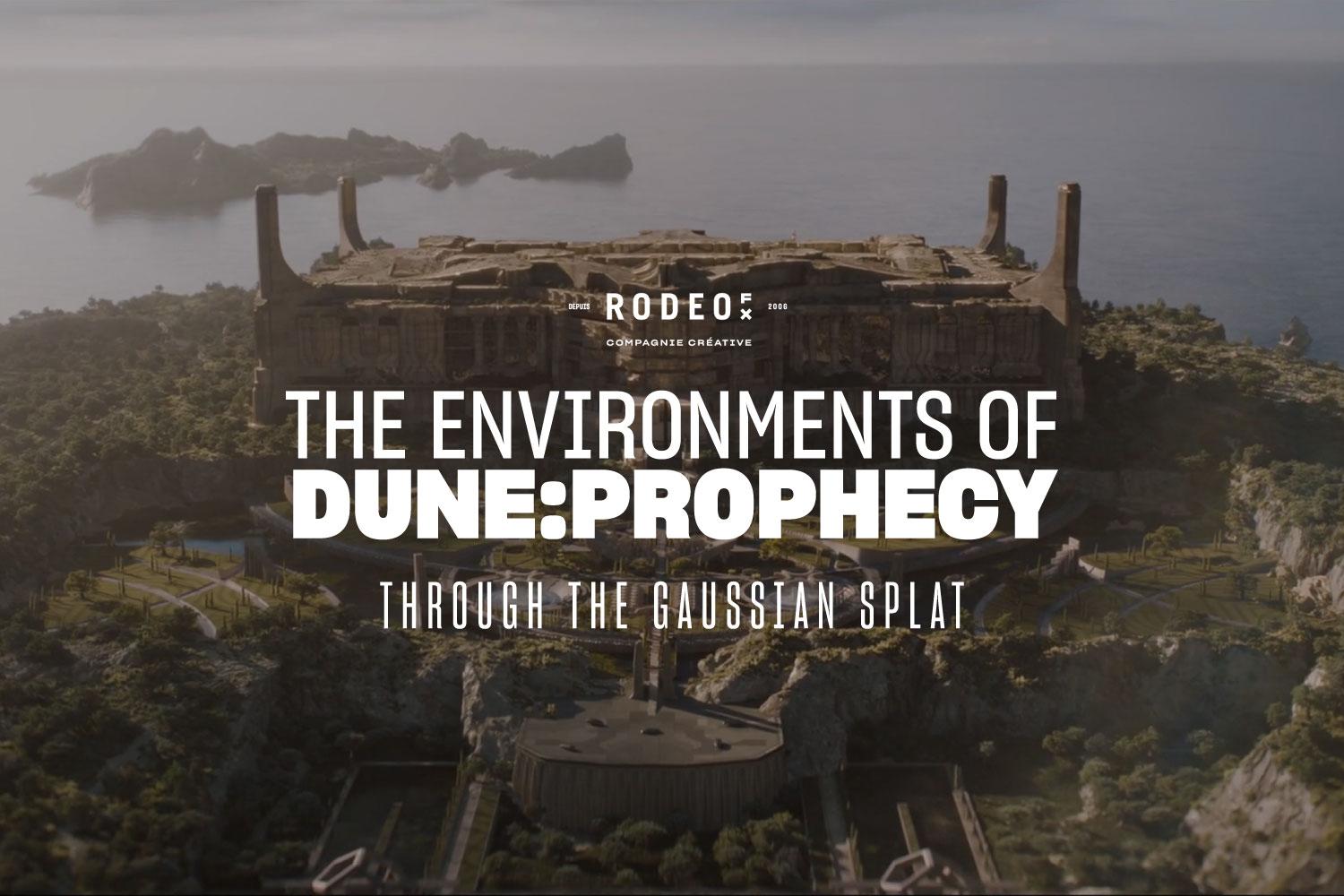
For the HBO series Dune: Prophecy, we sought to innovate beyond our traditional layouts and previsualization pipeline. In particular, for the Imperial Palace environment, we explored a novel approach by integrating Gaussian Splat technology to enhance the quality and efficiency of our full CG camera layouts. This talk will delve into our technical exploration, pipeline development, and the tangible benefits achieved through this methodology. Our initial focus was on accelerating the previsualization process while maintaining high visual fidelity. Traditionally, we relied on a Maya playblast workflow, but early in production, we identified the potential of Gaussian Splats to revolutionize our approach. Our goal was twofold: Enhancing CG camera layouts with superior lighting and texturing. Reducing turnaround time through real-time rendering while leveraging our CG environment builds. To achieve this, we explored methods to generate synthetic Gaussian Splats from CG data, leading to the development of a streamlined pipeline within Houdini. The integration of Gaussian Splats significantly enhanced our previsualization and layout presentations, allowing for more immersive and detailed full CG sequences. Furthermore, we expanded our exploration by incorporating MetaHumans with Gaussian Splat environments, opening new possibilities for directors to use this technology as a dynamic camera-blocking tool.



