
“Out of This World Shading: Look Development for Aliens in Pixar’s Elio” by Crow, Lee, Wang and Dizon
Conference:
Type(s):
Title:
- Out of This World Shading: Look Development for Aliens in Pixar's Elio
Session/Category Title:
- No Shade, High Energy Lighting and Shading
Presenter(s)/Author(s):
Moderator(s):
Abstract:
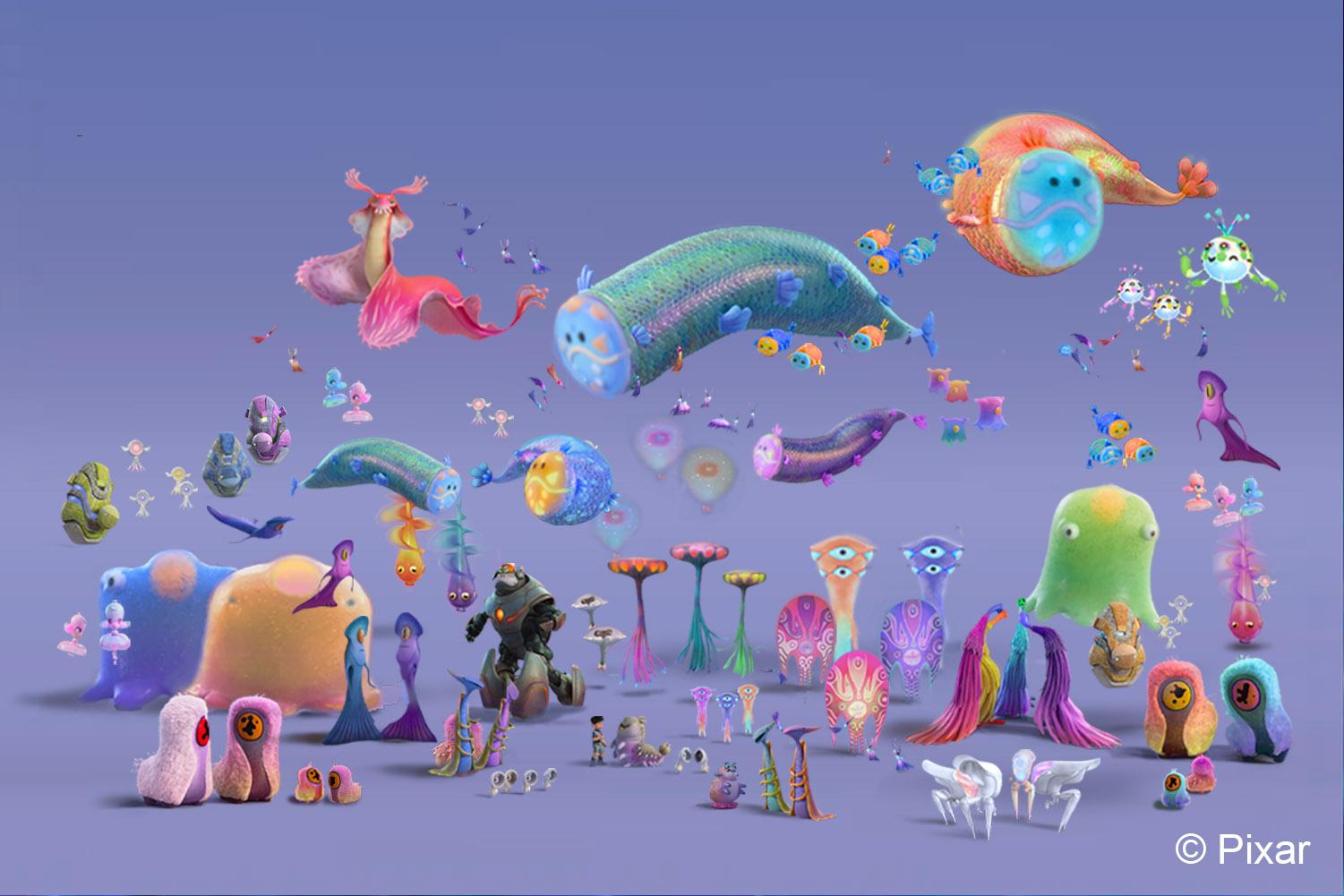
The aliens in Pixar’s Elio commanded a unique look in space. We crafted each species individually with respect to its own characteristic features, carefully choosing colors and material properties to create over 18 species. Their designs took inspiration from various flora and fauna including micro-organisms, worm-like, bird-like, and sea creatures. They needed to be appealing, organic, and tactile but without feeling “earth bound”. To implement these designs and help them feel unique and alien, our team explored combining illumination models and animated shading techniques in ways not commonly found in earth species and materials. By using a test geometric model with both curves and hard angle surfaces, we tested our materials using just basic colors for a base on which to build our materials. We combined some ideas, like a fake light below a screen pattern, glitter on a highly subsurface material, or combining subsurface and refraction. We looked for opportunities for animated features or elements that changed over time, such as animated textures or moving particles that used to drive non-homogenous volumes or instanced geometry made to look like bubbles or particulates within a material. Shading artists collaborated with the design artists to help determine the final look of some of our alien characters. To receive a final shading packet from art with designs and photo reference proved difficult and inefficient for the design artists without incorporating the look experiments of the shading artists that could help inform or add to the designs. Thus we used a new process that started with a more informal design packet with general ideas for the character, with the design and shading artists working back and forth giving ideas and experimenting with them to receive more feedback and iterate towards the final designs.



