“Spatial Adaptivity for Solving PDEs on Manifolds With the Closest Point Method” by King, Ruuth and Batty
Conference:
Type(s):
Title:
- Spatial Adaptivity for Solving PDEs on Manifolds With the Closest Point Method
Session/Category Title:
- 3D & Geometry
Presenter(s)/Author(s):
Abstract:
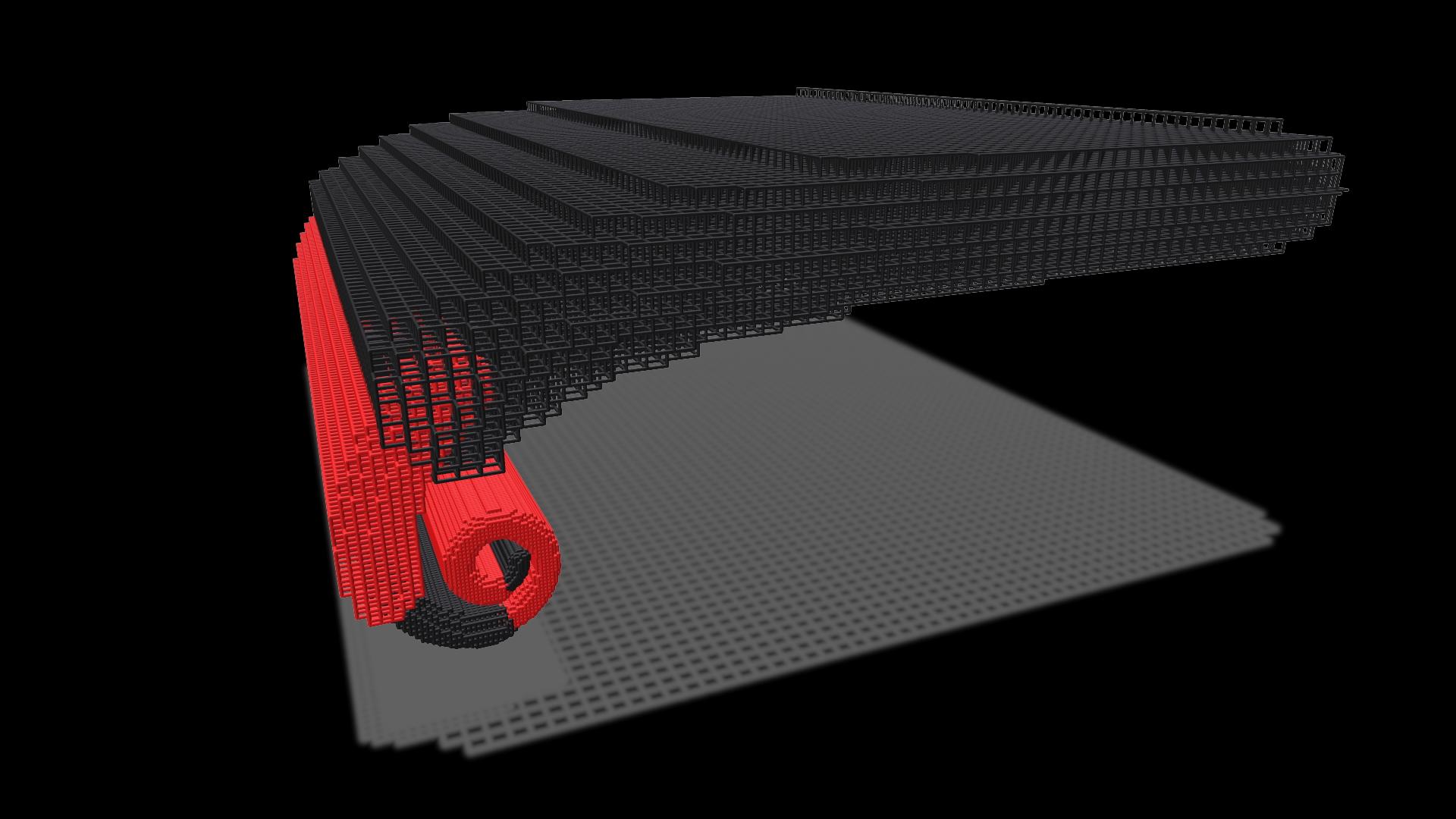
We propose the first framework to enable spatial adaptivity with the closest point method, which provides a more efficient spatial discretization suitable for recent applications of the closest point method in computer graphics, such as fluid simulation [Morgenroth et al. 2020] and geometry processing [King et al. 2024]. INVITED TO THE FIRST ROUND OF THE STUDENT RESEARCH COMPETITION
References:
[1] Nathan King. 2025. Closest Point Geometry Processing: Extensions and Applications of the Closest Point Method for Geometric Problems in Computer Graphics. PhD thesis. University of Waterloo. https://hdl.handle.net/10012/21853
[2] Nathan King, Steven Ruuth, and Christopher Batty. 2024a. A Simple Heat Method for Computing Geodesic Paths on General Manifold Representations. In SIGGRAPH Asia 2024 Posters(SA ’24). ACM, New York, NY, USA, Article 69, 2 pages.
[3] Nathan King, Haozhe Su, Mridul Aanjaneya, Steven Ruuth, and Christopher Batty. 2024b. A Closest Point Method for PDEs on Manifolds with Interior Boundary Conditions for Geometry Processing. ACM Transactions on Graphics (2024).
[4] P.-L. Manteaux, C. Wojtan, R. Narain, S. Redon, F. Faure, and M.-P. Cani. 2017. Adaptive Physically Based Models in Computer Graphics. Computer Graphics Forum 36, 6 (2017), 312–337.
[5] D. Morgenroth, S. Reinhardt, D. Weiskopf, and B. Eberhardt. 2020. Efficient 2D Simulation on Moving 3D Surfaces. Computer Graphics Forum 39, 8 (2020), 27–38.