“OpenVDB” by Museth, Budsberg, Sirois-Vigneux, Hurst, Williams, et al. …
Conference:
Type(s):
Title:
- OpenVDB
Organizer(s):
Presenter(s)/Author(s):
Abstract:
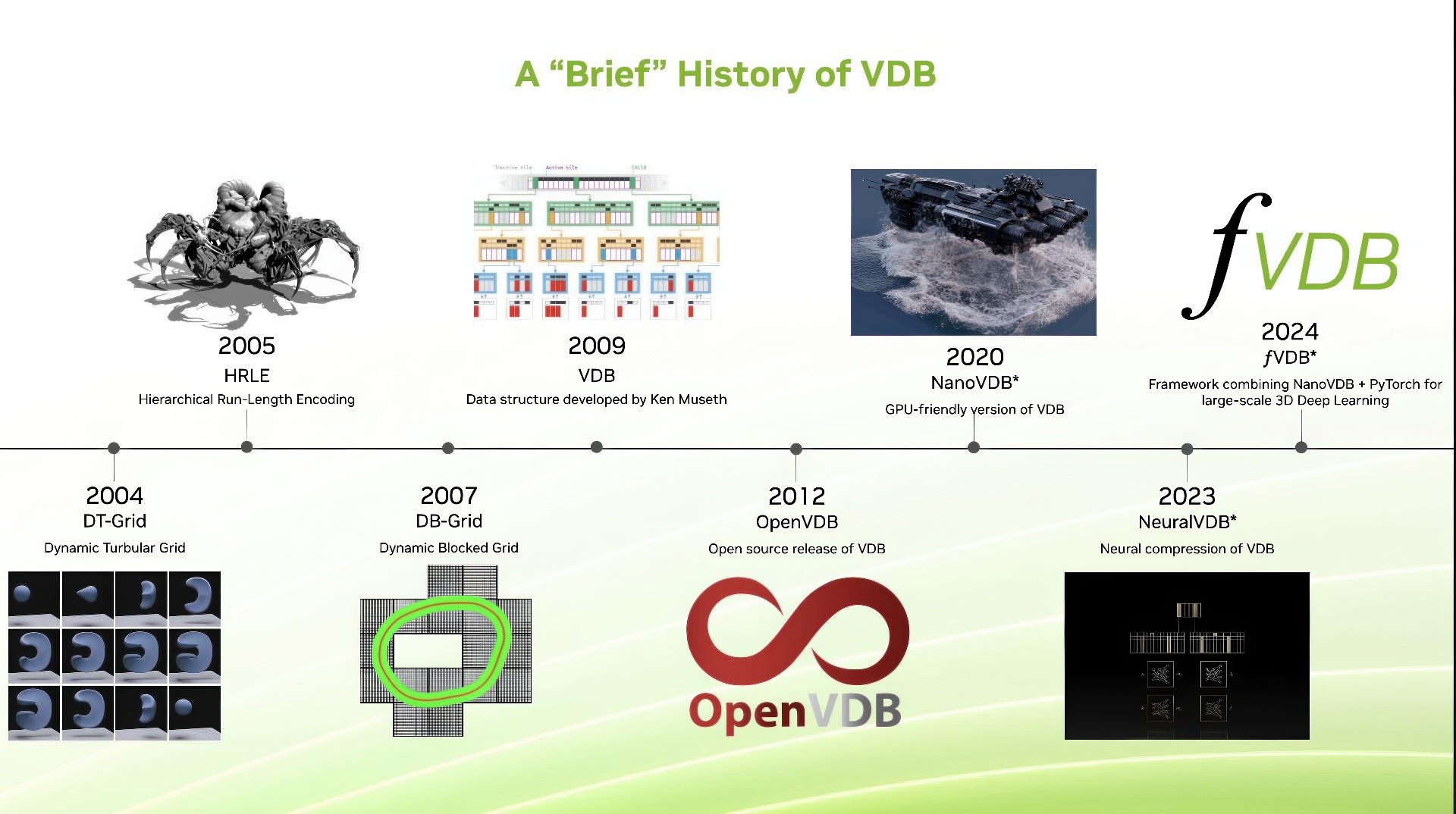
This course will cover the compact volume data structure and various tools available in the open source library OpenVDB. Since its release in 2012 it has become an industry standard and has been used in numerous VFX movies release in the past decade. It is also adopted by most commercial software packages used by the movie industry, including Houdini, RenderMan, Arnold, RealFlow, Clarisse, Guerrilla Render, Maxwell Render, Modo, V-Ray, Octane Render, 3Delight, Embergee, Blender, Chaos Phoenix, Corona, FumeFX, KeyShot, LightWave, ThinkingParticles, Eddy, Bifrost, Siemens NX, Unreal Engine, as well as bindings for Mathmatica. In 2018 OpenVDB was the first open source project to be adopted by the Academy Software Foundation (ASWF) and the Linux Foundation.
Additional Information:
- Induction (K Museth) – 15 min
- OpenVDB NanoVDB Applications Productions examples (J. Budsberg) – 20 min
- Material Point Method (A. Sirois-Vigneux) – 20 min
- SDFs of tubes and wireframes (G. Hurst) – 20 min
- Break – 10 min
- fVDB: A DL framework for spatial intelligence (F. William and J. Swartz) – 40 min
- Coding Half-float support (A. Pradhana and G. Hurst) – 15 min
- Iterators, Sampling and Parallel Access Patterns (D. Bailey) – 20 min
- Partice surfacing (N. Avramoussis) – 20 min
Intermediate
Prerequisite: A rudimentary knowledge of typical workflows for volumetric modeling and/or simulations, e.g. voxels, iso-surfaces, level sets and voxelization. Knowledge of C-plus-plus is also advantageous but by no means required.
Topics: Data Visualization, Rendering, Simulation, Volumes
List of topics and approximate times:
Additional Info: This course will cover the latest developments and tools in the open source library OpenVDB. To mention just a few this includes, fVDB (a DL framework based on VDB), improved GPU support of NanoVDB, new tools (eg. level set and anisotropic surfacing), new grid types (half-float grids), and production examples.