“Beyond Automation: Fostering Agency Between Humans, Algorithms, and Machines in Computational Design for Digital Fabrication” by Tucker
Conference:
Type(s):
Title:
- Beyond Automation: Fostering Agency Between Humans, Algorithms, and Machines in Computational Design for Digital Fabrication
Session/Category Title:
- Art & Design
Presenter(s)/Author(s):
Abstract:
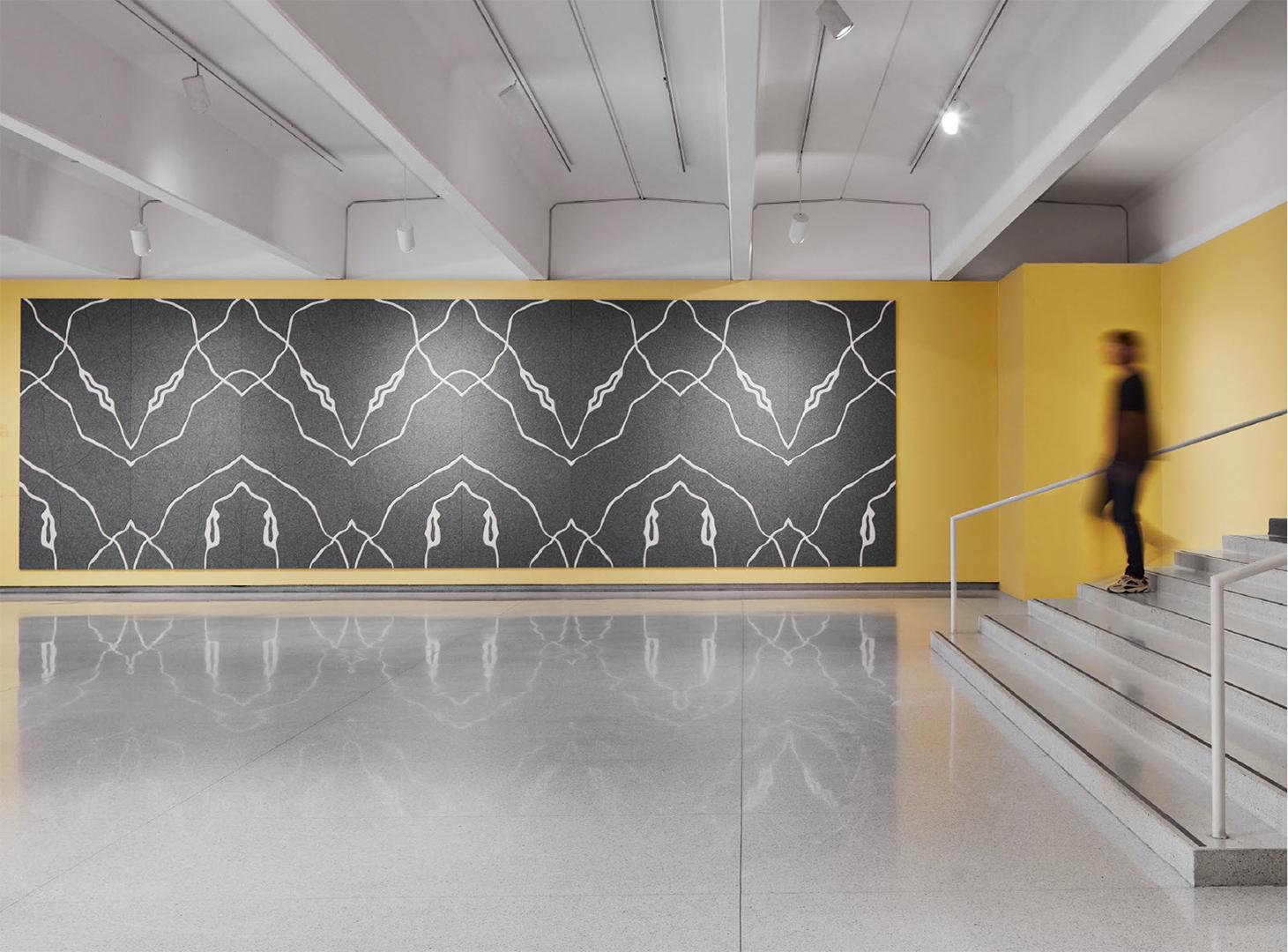
This project explores the role of the designer in digital fabrication workflows as digitization leads to higher levels of design automation. As digital technologies are adopted to streamline design to manufacturing workflows, elements of the creative process can become standardized to improve production efficiency at the cost of designer autonomy and product customization. In order to ensure designers’ agency and increase product variation, the Carrara project presents a collaborative tool utilizing agent-based modeling (ABM) to represent designers, fabrication machines, and algorithms as active co-participants in the design process. This co-participatory workflow enables a generative, scalable product line that takes advantage of digital efficiencies while providing the designer with autonomy and control in the creative process.
References:
[1] Thomas Bock. 2015. The future of construction automation: Technological disruption and the upcoming ubiquity of robotics. Automation in Construction 59 (Nov. 2015), 113–121.
[2] C M Macal and M J North. 2010. Tutorial on agent-based modelling and simulation. Journal of Simulation 4, 3 (Sept. 2010), 151–162.
[3] Madhumita Murgia. 2024. Code dependent: living in the shadow of AI (first u.s. edition ed.). Henry Holt and Company, New York, NY.
[4] Ming Shan Ng, Daniel Hall, Marc Schmailzl, Thomas Linner, and Thomas Bock. 2022. Identifying enablers and relational ontology networks in design for digital fabrication. Automation in Construction 144 (Dec. 2022), 104592.
[5] Sharon K. Parker. 2014. Beyond Motivation: Job and Work Design for Development, Health, Ambidexterity, and More. Annual Review of Psychology 65, 1 (Jan. 2014), 661–691.
[6] Sharon K. Parker and Gudela Grote. 2022. Automation, Algorithms, and Beyond: Why Work Design Matters More Than Ever in a Digital World. Applied Psychology 71, 4 (Oct. 2022), 1171–1204.
[7] David Stieler, Tobias Schwinn, Samuel Leder, Mathias Maierhofer, Fabian Kannenberg, and Achim Menges. 2022. Agent-based modeling and simulation in architecture. Automation in Construction 141 (Sept. 2022), 104426.
[8] Cody Tucker and Keaton Nemes. 2024. Object-Oriented Digital Fabrication for Architectural Products: Applying Principles from Object Oriented Programming in Digital Fabrication to Achieve More Efficient and Adaptable Product Customizations. In Designing Change, Vol. 1. Banff, Alberta, Canada, 501–511.
[9] Yannis Zavoleas. 2020. In the Architect’s Mind: Drawing (,) Architecture’s Future. In Computational design: from promise to practice. Avedition, Stuttgart, 176. OCLC: on1130116855.