
“Experiencing the Presence of Users in Virtual Space Through Sensory Modalities” by Lim and Jung
Conference:
Experience Type(s):
Title:
- Experiencing the Presence of Users in Virtual Space Through Sensory Modalities
Presenter(s):
Description:
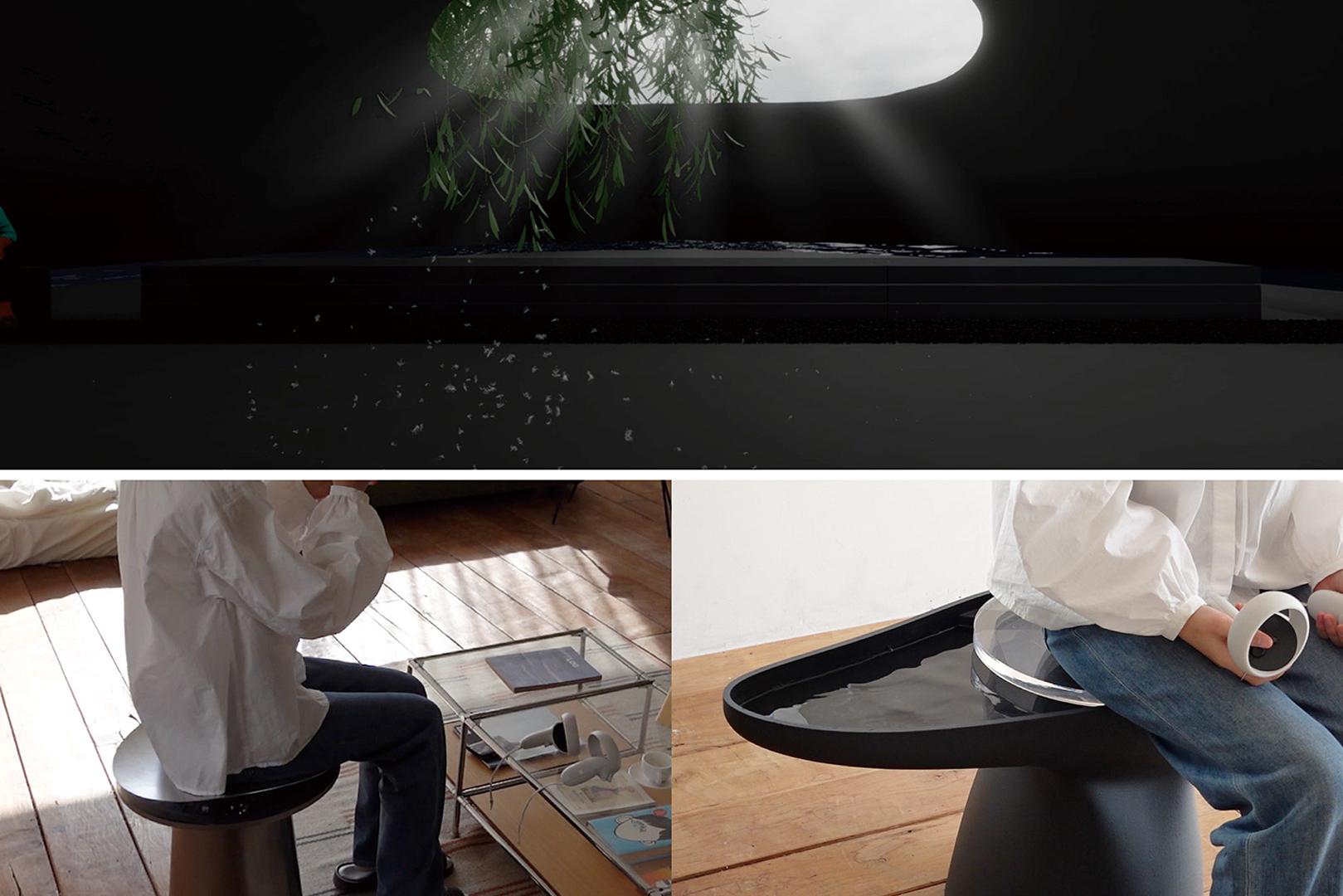
This study proposes a novel design to enhance social presence in social VR environments by enabling users to experience the movements of others outside their view using multi-sensory feedback. In traditional VR environments, interactions primarily occur within the user’s field of view (FoV), limiting the ability to perceive invisible users. This research introduces a solution to bridge this gap by integrating tactile and sensory cues, such as scent and sound, into the user experience, thereby improving the perception of distant avatars and their movements. The design consists of a VR setup where users are situated in fixed positions, allowing them to move their arms and heads. Their movements are represented by dust-like particles visible in the VR environment. Additionally, users sit on specially designed chairs, which are integrated with sensory feedback systems, such as scent and sound emitters. These chairs adjust the intensity of scent and sound based on the proximity of invisible avatars, providing users with real-time, sensory-based cues about the avatars’ positions. This setup is powered by Unity and Arduino, enabling seamless data transmission to adjust the sensory outputs accordingly. Through this system, users can experience a heightened sense of immersion and presence by perceiving the movements of others beyond their visual range. This design marks a significant advancement in VR interaction, providing new ways to engage with the virtual world. By incorporating multi-sensory feedback, this research contributes to the development of more intuitive and immersive VR environments, offering fresh insights into the role of sensory experiences in fostering social interaction and presence in virtual spaces. The contribution to SIGGRAPH lies in pushing the boundaries of social VR interaction by exploring the integration of sensory feedback, which offers a more holistic approach to social presence in virtual environments.
References:
[1] Fox Jesse, Arena Dylan, Bailenson Jeremy N. (2009). Virtual reality: A survival guide for the social scientist. Journal of Media Psychology: Theories, Methods, and Applications, 21(3), 95–113.
[2] S Dincelli, E., Yayla, A. 2022. Immersive virtual reality in the age of the Metaverse: A hybrid-narrative review based on the technology affordance perspective. The Journal of Strategic Information Systems, 31(2).
[3] Heeter, C.1992. Being there: The subjective experience of presence. Presence: Teleoperators&Virtual Environemnts, 1(2), 262-271



