
“Computational Craft: Computational Fabrication Methods for Enabling Craft Production in Textiles and Ceramics” by Jacobs, Yu, Whiting, Leake, Peek, et al. …
Conference:
Type(s):
Title:
- Computational Craft: Computational Fabrication Methods for Enabling Craft Production in Textiles and Ceramics
Organizer(s):
Presenter(s)/Author(s):
Abstract:
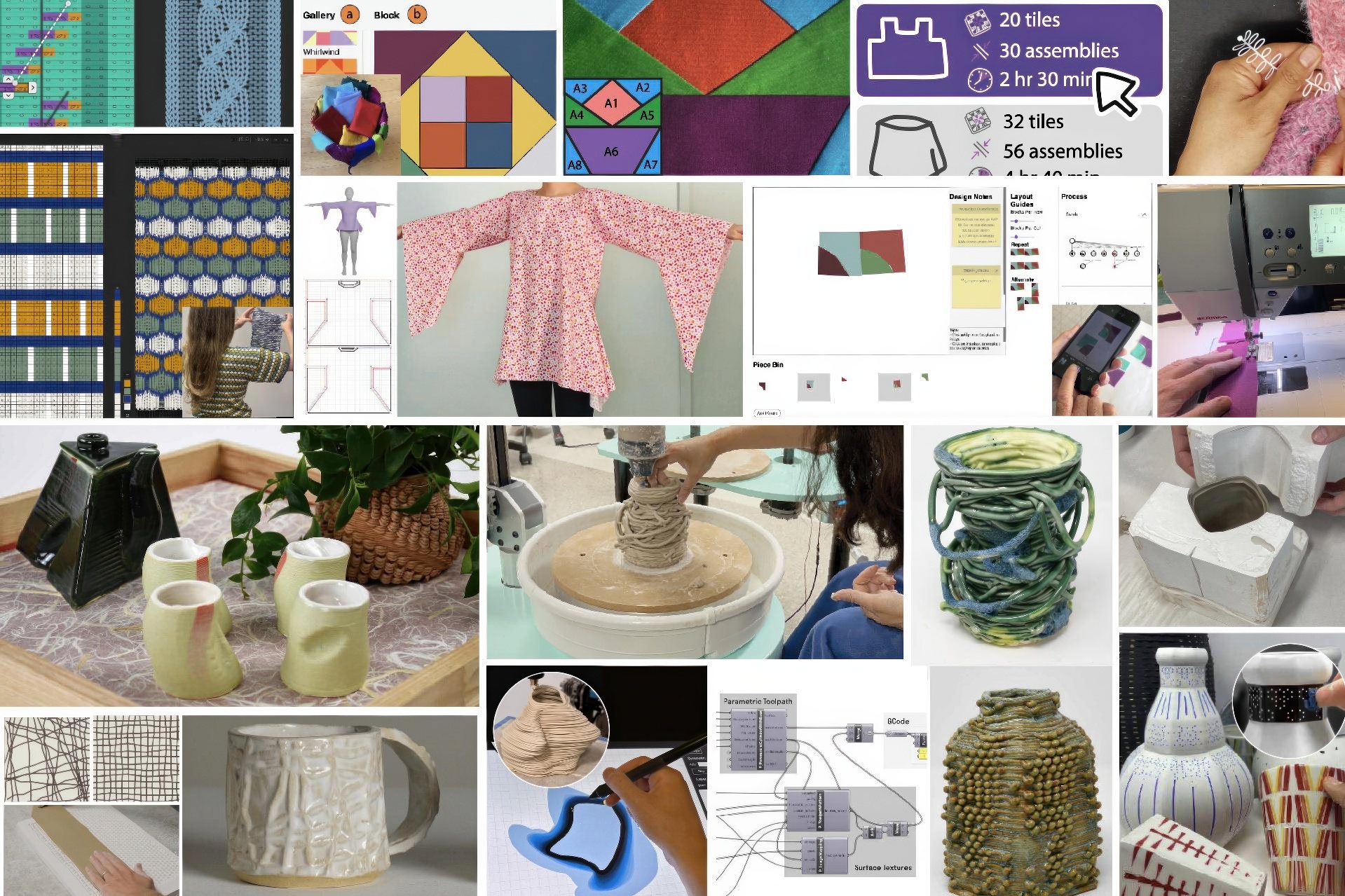
This course will introduce attendees to foundations in computational craft. Computational Craft integrates computational fabrication– the use of computer programming to develop models and machine instructions for digital fabrication– with established craft materials and techniques to fabricate functional and decorative craft artifacts. Instructors will cover methods from two areas of craft production: ceramics and textiles. Within the domain of textiles, we will cover computational techniques applicable to machine knitting and modular or zero-waste design for crochet, quiltmaking, and other cut-pattern design methods. Attendees will learn about 1) craft materials (e.g., yarn, fabric, and clay) and manual methods for fabrication of these materials, 2) compatible machining methods (e.g., CNC knitting, subtractive digital fabrication, and clay 3D printing), 3) general computational design and optimization techniques for computational fabrication, and 4) specific methods from the instructors’ research in integrating insights from manual craft practitioners with computational methods to support domain-specific craft-compatible computational fabrication techniques. We will cover general approaches to developing domain-specific computational representations for craft production processes, suitable applications of material simulation and visualization, and methods for enforcing craft-specific constraints in computational design tools without limiting the exercise of craft skills and creative decision-making. In addition, we will introduce computational approaches to dynamically control digital fabrication machine behaviors in ways that align with manual craft production. Overall, our course will illustrate the synergies between methods from graphics research and computational fabrication while providing concrete examples of how the physical realities of craft production require flexible computational methods directly informed by material practice.
Additional Information:
- Overview of Computational Craft– Opportunities and Challenges 15 minutes
- (Presented by Nadya Peek)
- Historical relationships between digital fabrication and craft production Industrial and independent applications of digital fabrication and computational design in craft artifact production. General benefits and challenges of reconciling digital instructions and models with physical materials and machining behaviors.
- Computational Textiles 1 hour and 15 minutes
- Knitting
- (Presented by Hannah Twigg Smith and Emily Whiting)
- Overview of knitting process and the use of CNC technology to produce knit structures Computational Design and Yarn-Level Simulation of Slip and Tuck Colorwork Knitting Patterns Abstracting Knitting Design Elements with Blended Raster/Vector Primitives
- Break
- Modular Textile Design Overview of modular textile design processes
- (Presented by Emilie Yu)
- Computationally-Supported Quiltmaking
- (Presented by Mackenzie Leake)
- Traditional quiltmaking practices
- Mathematical representations for paper pieceable quilts Aiding quilt design through computational tools for scrap use, sketching and improvisation.
- Computationally Supported Modular Crochet Fabrication
- (Presented by Emilie Yu)
- Overview of crochet textile structure and modular crochet design Computationally guided assembly and reassembly of modular crochet garments
- Break
- Computational Fabrication for Ceramics 1 hour
- Overview of the Ceramics Production Workflow
- (Presented by Emilie Yu)
- Clay 3D Printing Methods
- (Presented by Emilie Yu)
- Material constraints for Clay 3D printing CAM-Based design methods Computational Ceramics Surface Decoration
- (Presented by Jennifer Jacobs)
- Manual Surface decoration workflows Computational methods for adaptable surface decoration
- Break
- Dynamic 3D Printer Control
- (Presented by Jennifer Jacobs)
- GCode-based approaches for dynamic control Step-direction approaches for dynamic control without kinematic disruption
- Applications, Implications, and Limitations of Computational Craft 15 minutes
- (Presented by Nadya Peek)
Beginner
Prerequisite: The course has no explicit prerequisites; however, because we cover computational design methods in detail, a background in computer science will aid attendees in understanding much of the practical course content.
Topics: Art, Cloth, Fabrication, Fashion
List of topics and approximate times:
Additional Info: This course will introduce attendees to foundations in computational craft. Computational Craft integrates computational fabrication– the use of computer programming to develop models and machine instructions for digital fabrication– with established craft materials and techniques to fabricate functional and decorative craft artifacts.



