
“VET: Visual Error Tomography for Point Cloud Completion and High-Quality Neural Rendering” by Franke, Rückert, Fink, Innmann and Stamminger
Conference:
Type(s):
Title:
- VET: Visual Error Tomography for Point Cloud Completion and High-Quality Neural Rendering
Session/Category Title:
- Anything Can be Neural
Presenter(s)/Author(s):
Abstract:
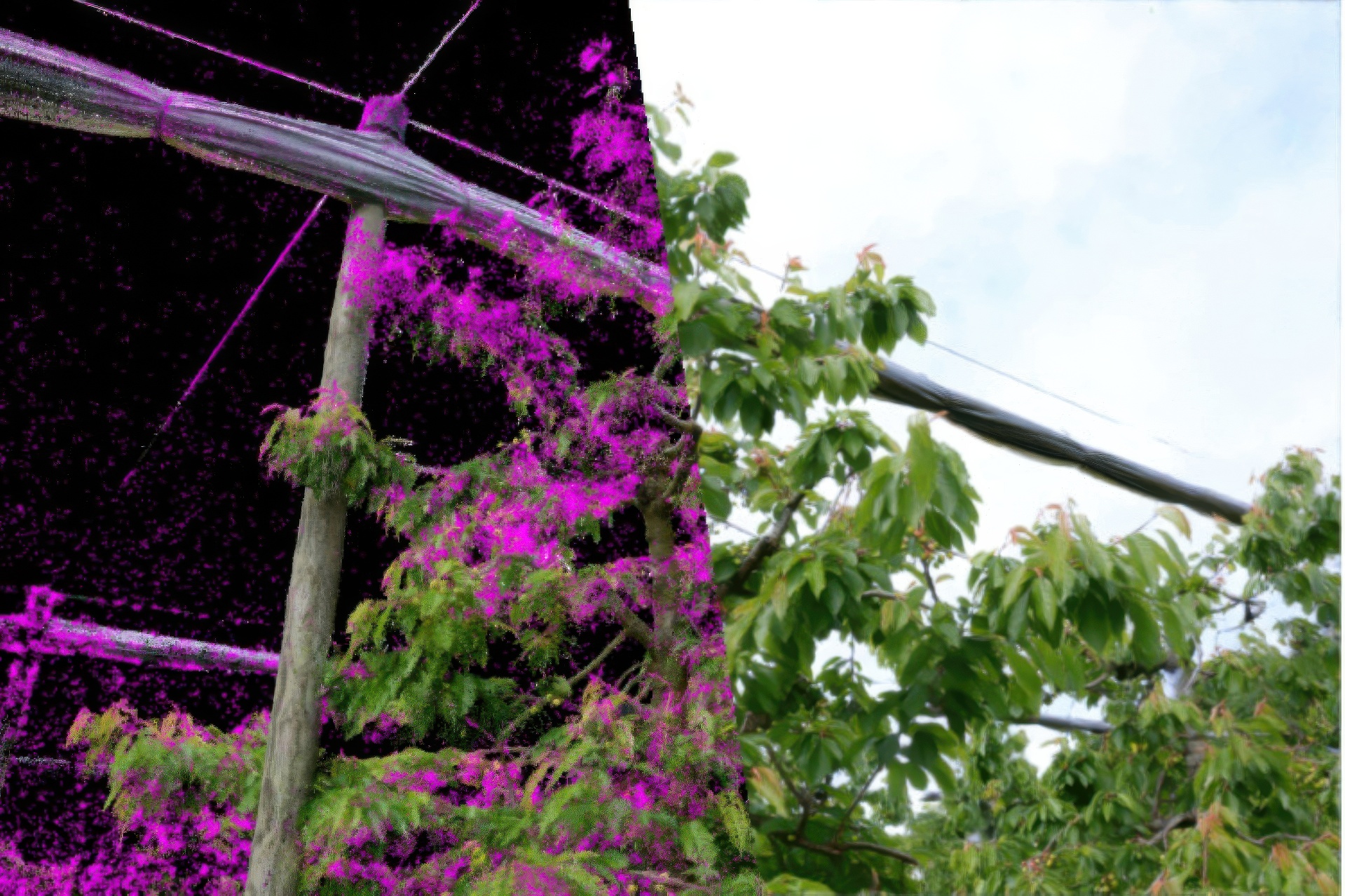
In the last few years, deep neural networks opened the doors for big advances in novel view synthesis. Many of these approaches are based on a (coarse) proxy geometry obtained by structure from motion algorithms. Small deficiencies in this proxy can be fixed by neural rendering, but larger holes or missing parts, as they commonly appear for thin structures or for glossy regions however still lead to very distracting artifacts and temporal instability. In this paper, we present a novel neural rendering based approach to detect and fix such deficiencies. As a proxy, we use a point cloud, which allows us to easily remove outlier geometry and to fill in missing geometry without complicated topological operations. Keys to our approach are (i) a differentiable, blending point-based renderer that can blend out redundant points, as well as (ii) the concept of Visual Error Tomography (VET), which allows us to lift 2D error maps to identify 3D-regions lacking geometry and to spawn novel points accordingly. Furthermore, (iii) by adding points as nested environment maps, our approach allows us to generate high-quality renderings of the surroundings in the same pipeline. In our results, we show that our approach can significantly improve the quality of a point cloud obtained by structure from motion and thus increase novel view synthesis quality. In contrast to point growing techniques, the approach can also fix large-scale holes and missing thin structures effectively. Rendering quality outperforms state-of-the-art methods and temporal stability is significantly improved, while rendering is possible with real-time frame rates.
References:
[1]
Kara-Ali Aliev, Artem Sevastopolsky, Maria Kolos, Dmitry Ulyanov, and Victor Lempitsky. 2020. Neural point-based graphics. In European Conference on Computer Vision. Springer, 696–712.
[2]
Jonathan T. Barron, Ben Mildenhall, Matthew Tancik, Peter Hedman, Ricardo Martin-Brualla, and Pratul P. Srinivasan. 2021. Mip-NeRF: A Multiscale Representation for Anti-Aliasing Neural Radiance Fields. In Proceedings of the IEEE/CVF International Conference on Computer Vision (ICCV). 5855–5864.
[3]
Jonathan T Barron, Ben Mildenhall, Dor Verbin, Pratul P Srinivasan, and Peter Hedman. 2022. Mip-nerf 360: Unbounded anti-aliased neural radiance fields. In Proceedings of the IEEE/CVF Conference on Computer Vision and Pattern Recognition. 5470–5479.
[4]
Jonathan T Barron, Ben Mildenhall, Dor Verbin, Pratul P Srinivasan, and Peter Hedman. 2023. Zip-NeRF: Anti-Aliased Grid-Based Neural Radiance Fields. arXiv preprint arXiv:2304.06706 (2023).
[5]
Kenneth E Batcher. 1968. Sorting networks and their applications. In Proceedings of the April 30–May 2, 1968, spring joint computer conference. 307–314.
[6]
T.M. Buzug. 2008. Computed Tomography: From Photon Statistics to Modern Cone-Beam CT. Springer. https://books.google.de/books?id=HBfvngEACAAJ
[7]
Gaurav Chaurasia, Sylvain Duchene, Olga Sorkine-Hornung, and George Drettakis. 2013. Depth synthesis and local warps for plausible image-based navigation. ACM Transactions on Graphics (TOG) 32, 3 (2013), 1–12.
[8]
Anpei Chen, Zexiang Xu, Andreas Geiger, Jingyi Yu, and Hao Su. 2022. TensoRF: Tensorial Radiance Fields. In Computer Vision – ECCV 2022, Shai Avidan, Gabriel Brostow, Moustapha Cissé, Giovanni Maria Farinella, and Tal Hassner (Eds.). Springer Nature Switzerland, Cham, 333–350.
[9]
Sungjoon Choi, Qian-Yi Zhou, Stephen Miller, and Vladlen Koltun. 2016. A Large Dataset of Object Scans. arXiv:1602.02481 (2016).
[10]
Paul Debevec, Yizhou Yu, and George Boshokov. 1998. Efficient view-dependent IBR with projective texture-mapping. In EG Rendering Workshop, Vol. 4.
[11]
Laura Fink, Sing Chun Lee, Jie Ying Wu, Xingtong Liu, Tianyu Song, Yordanka Velikova, Marc Stamminger, Nassir Navab, and Mathias Unberath. 2019. Lumipath–towards real-time physically-based rendering on embedded devices. In Medical Image Computing and Computer Assisted Intervention–MICCAI 2019: 22nd International Conference, Shenzhen, China, October 13–17, 2019, Proceedings, Part V 22. Springer, 673–681.
[12]
John Flynn, Ivan Neulander, James Philbin, and Noah Snavely. 2016. DeepStereo: Learning to Predict New Views from the World’s Imagery. In Proceedings of the IEEE conference on computer vision and pattern recognition. 5515–5524.
[13]
Linus Franke, Nikolai Hofmann, Marc Stamminger, and Kai Selgrad. 2018. Multi-layer depth of field rendering with tiled splatting. Proceedings of the ACM on Computer Graphics and Interactive Techniques 1, 1 (2018), 1–17.
[14]
Sara Fridovich-Keil, Alex Yu, Matthew Tancik, Qinhong Chen, Benjamin Recht, and Angjoo Kanazawa. 2022. Plenoxels: Radiance Fields without Neural Networks. In 2022 IEEE/CVF Conference on Computer Vision and Pattern Recognition (CVPR). 5491–5500. https://doi.org/10.1109/CVPR52688.2022.00542
[15]
Yasutaka Furukawa, Brian Curless, Steven M Seitz, and Richard Szeliski. 2010. Towards internet-scale multi-view stereo. In 2010 IEEE computer society conference on computer vision and pattern recognition. IEEE, 1434–1441.
[16]
Yaroslav Ganin, Daniil Kononenko, Diana Sungatullina, and Victor Lempitsky. 2016. DeepWarp: Photorealistic Image Resynthesis for Gaze Manipulation. In European conference on computer vision. Springer, 311–326.
[17]
Peter Hedman, Julien Philip, True Price, Jan-Michael Frahm, George Drettakis, and Gabriel Brostow. 2018. Deep blending for free-viewpoint image-based rendering. ACM Transactions on Graphics (TOG) 37, 6 (2018), 1–15.
[18]
Benjamin Keinert, Matthias Innmann, Michael Sänger, and Marc Stamminger. 2015. Spherical fibonacci mapping. ACM Transactions on Graphics (TOG) 34, 6 (2015), 1–7.
[19]
Bernhard Kerbl, Georgios Kopanas, Thomas Leimkühler, and George Drettakis. 2023. 3D Gaussian Splatting for Real-Time Radiance Field Rendering. ACM Transactions on Graphics 42, 4 (2023).
[20]
Arno Knapitsch, Jaesik Park, Qian-Yi Zhou, and Vladlen Koltun. 2017. Tanks and Temples: Benchmarking Large-Scale Scene Reconstruction. ACM Transactions on Graphics 36, 4 (2017).
[21]
Georgios Kopanas, Thomas Leimkühler, Gilles Rainer, Clément Jambon, and George Drettakis. 2022. Neural point catacaustics for novel-view synthesis of reflections. ACM Transactions on Graphics (TOG) 41, 6 (2022), 1–15.
[22]
Georgios Kopanas, Julien Philip, Thomas Leimkühler, and George Drettakis. 2021. Point-Based Neural Rendering with Per-View Optimization. Computer Graphics Forum (Proceedings of the Eurographics Symposium on Rendering) 40, 4 (June 2021). http://www-sop.inria.fr/reves/Basilic/2021/KPLD21
[23]
Christoph Lassner and Michael Zollhöfer. 2021. Pulsar: Efficient Sphere-Based Neural Rendering. In Proceedings of the IEEE/CVF Conference on Computer Vision and Pattern Recognition (CVPR). 1440–1449.
[24]
Chongshan Lu, Fukun Yin, Xin Chen, Tao Chen, Gang Yu, and Jiayuan Fan. 2023. A Large-Scale Outdoor Multi-modal Dataset and Benchmark for Novel View Synthesis and Implicit Scene Reconstruction. arXiv preprint arXiv:2301.06782 (2023).
[25]
Ricardo Martin-Brualla, Noha Radwan, Mehdi SM Sajjadi, Jonathan T Barron, Alexey Dosovitskiy, and Daniel Duckworth. 2021. NeRF in the Wild: Neural Radiance Fields for Unconstrained Photo Collections. In Proceedings of the IEEE/CVF Conference on Computer Vision and Pattern Recognition. 7210–7219.
[26]
Moustafa Meshry, Dan B Goldman, Sameh Khamis, Hugues Hoppe, Rohit Pandey, Noah Snavely, and Ricardo Martin-Brualla. 2019. Neural rerendering in the wild. In Proceedings of the IEEE/CVF Conference on Computer Vision and Pattern Recognition. 6878–6887.
[27]
Ben Mildenhall, Pratul P Srinivasan, Rodrigo Ortiz-Cayon, Nima Khademi Kalantari, Ravi Ramamoorthi, Ren Ng, and Abhishek Kar. 2019. Local Light Field Fusion: Practical View Synthesis With Prescriptive Sampling Guidelines. ACM Transactions on Graphics (TOG) 38, 4 (2019), 1–14.
[28]
Ben Mildenhall, Pratul P Srinivasan, Matthew Tancik, Jonathan T Barron, Ravi Ramamoorthi, and Ren Ng. 2021. Nerf: Representing scenes as neural radiance fields for view synthesis. Commun. ACM 65, 1 (2021), 99–106.
[29]
Thomas Müller, Alex Evans, Christoph Schied, and Alexander Keller. 2022. Instant neural graphics primitives with a multiresolution hash encoding. arXiv preprint arXiv:2201.05989 (2022).
[30]
Francesco Pittaluga, Sanjeev J. Koppal, Sing Bing Kang, and Sudipta N. Sinha. 2019. Revealing Scenes by Inverting Structure From Motion Reconstructions. In Proceedings of the IEEE/CVF Conference on Computer Vision and Pattern Recognition (CVPR).
[31]
Florent Poux, C Mattes, Z Selman, and L Kobbelt. 2022. Automatic region-growing system for the segmentation of large point clouds. Automation in Construction 138 (2022), 104250.
[32]
Ruslan Rakhimov, Andrei-Timotei Ardelean, Victor Lempitsky, and Evgeny Burnaev. 2022. NPBG++: Accelerating Neural Point-Based Graphics. In Proceedings of the IEEE/CVF Conference on Computer Vision and Pattern Recognition. 15969–15979.
[33]
Christian Reiser, Songyou Peng, Yiyi Liao, and Andreas Geiger. 2021. Kilonerf: Speeding up neural radiance fields with thousands of tiny mlps. In Proceedings of the IEEE/CVF International Conference on Computer Vision. 14335–14345.
[34]
Gernot Riegler and Vladlen Koltun. 2020. Free View Synthesis. In European Conference on Computer Vision. Springer, 623–640.
[35]
Gernot Riegler and Vladlen Koltun. 2021. Stable view synthesis. In Proceedings of the IEEE/CVF Conference on Computer Vision and Pattern Recognition. 12216–12225.
[36]
Darius Rückert, Linus Franke, and Marc Stamminger. 2022. Adop: Approximate differentiable one-pixel point rendering. ACM Transactions on Graphics (TOG) 41, 4 (2022), 1–14.
[37]
Darius Rückert, Yuanhao Wang, Rui Li, Ramzi Idoughi, and Wolfgang Heidrich. 2022. NeAT: Neural Adaptive Tomography. ACM Trans. Graph. 41, 4, Article 55 (jul 2022), 13 pages. https://doi.org/10.1145/3528223.3530121
[38]
Johannes L Schönberger and Jan-Michael Frahm. 2016. Structure-from-motion revisited. In Proceedings of the IEEE conference on computer vision and pattern recognition. 4104–4113.
[39]
Johannes Lutz Schönberger, Enliang Zheng, Marc Pollefeys, and Jan-Michael Frahm. 2016. Pixelwise View Selection for Unstructured Multi-View Stereo. In European Conference on Computer Vision (ECCV).
[40]
Markus Schütz, Bernhard Kerbl, and Michael Wimmer. 2022. Software Rasterization of 2 Billion Points in Real Time. arXiv preprint arXiv:2204.01287 (2022).
[41]
Kai Selgrad, Carsten Dachsbacher, Quirin Meyer, and Marc Stamminger. 2015. Filtering multi-layer shadow maps for accurate soft shadows. In Computer Graphics Forum, Vol. 34. Wiley Online Library, 205–215.
[42]
Harry Shum and Sing Bing Kang. 2000. Review of image-based rendering techniques. In Visual Communications and Image Processing 2000, Vol. 4067. SPIE, 2–13.
[43]
Zhenbo Song, Wayne Chen, Dylan Campbell, and Hongdong Li. 2020. Deep Novel View Synthesis from Colored 3D Point Clouds. In European Conference on Computer Vision. Springer, 1–17.
[44]
Pratul P Srinivasan, Richard Tucker, Jonathan T Barron, Ravi Ramamoorthi, Ren Ng, and Noah Snavely. 2019. Pushing the Boundaries of View Extrapolation With Multiplane Images. In Proceedings of the IEEE/CVF Conference on Computer Vision and Pattern Recognition. 175–184.
[45]
Ayush Tewari, Justus Thies, Ben Mildenhall, Pratul Srinivasan, Edgar Tretschk, W Yifan, Christoph Lassner, Vincent Sitzmann, Ricardo Martin-Brualla, Stephen Lombardi, 2022. Advances in neural rendering. In Computer Graphics Forum, Vol. 41. Wiley Online Library, 703–735.
[46]
Justus Thies, Michael Zollhöfer, and Matthias Nießner. 2019. Deferred Neural Rendering: Image Synthesis using Neural Textures. ACM Transactions on Graphics (TOG) 38, 4 (2019), 1–12.
[47]
Richard Tucker and Noah Snavely. 2020. Single-View View Synthesis With Multiplane Images. In Proceedings of the IEEE/CVF Conference on Computer Vision and Pattern Recognition. 551–560.
[48]
Haithem Turki, Deva Ramanan, and Mahadev Satyanarayanan. 2022. Mega-NeRF: Scalable Construction of Large-Scale NeRFs for Virtual Fly-Throughs. In Proceedings of the IEEE/CVF Conference on Computer Vision and Pattern Recognition. 12922–12931.
[49]
Olivia Wiles, Georgia Gkioxari, Richard Szeliski, and Justin Johnson. 2020. SynSin: End-to-end View Synthesis from a Single Image. In Proceedings of the IEEE/CVF Conference on Computer Vision and Pattern Recognition. 7467–7477.
[50]
Qiangeng Xu, Zexiang Xu, Julien Philip, Sai Bi, Zhixin Shu, Kalyan Sunkavalli, and Ulrich Neumann. 2022. Point-nerf: Point-based neural radiance fields. In Proceedings of the IEEE/CVF Conference on Computer Vision and Pattern Recognition. 5438–5448.
[51]
Alex Yu, Ruilong Li, Matthew Tancik, Hao Li, Ren Ng, and Angjoo Kanazawa. 2021a. Plenoctrees for real-time rendering of neural radiance fields. In Proceedings of the IEEE/CVF International Conference on Computer Vision. 5752–5761.
[52]
Alex Yu, Vickie Ye, Matthew Tancik, and Angjoo Kanazawa. 2021b. pixelnerf: Neural radiance fields from one or few images. In Proceedings of the IEEE/CVF Conference on Computer Vision and Pattern Recognition. 4578–4587.
[53]
Kai Zhang, Gernot Riegler, Noah Snavely, and Vladlen Koltun. 2020. Nerf++: Analyzing and improving neural radiance fields. arXiv preprint arXiv:2010.07492 (2020).
[54]
Qiang Zhang, Seung-Hwan Baek, Szymon Rusinkiewicz, and Felix Heide. 2022. Differentiable point-based radiance fields for efficient view synthesis. arXiv preprint arXiv:2205.14330 (2022).
[55]
Tinghui Zhou, Richard Tucker, John Flynn, Graham Fyffe, and Noah Snavely. 2018. Stereo Magnification: Learning View Synthesis Using Multiplane Images. ACM Transactions on Graphics (TOG) 37, 4 (2018), 1–12.
[56]
Tinghui Zhou, Shubham Tulsiani, Weilun Sun, Jitendra Malik, and Alexei A Efros. 2016. View Synthesis by Appearance Flow. In European conference on computer vision. Springer, 286–301.
[57]
Yiming Zuo and Jia Deng. 2022. View Synthesis with Sculpted Neural Points. arXiv preprint arXiv:2205.05869 (2022).



