
“The Posthumous World: Our selves, Our Bodies and a World that Will Continue Without Us” by Wright
Conference:
Type(s):
Title:
- The Posthumous World: Our selves, Our Bodies and a World that Will Continue Without Us
Session/Category Title:
- The Nature of Reality
Presenter(s)/Author(s):
Moderator(s):
Abstract:
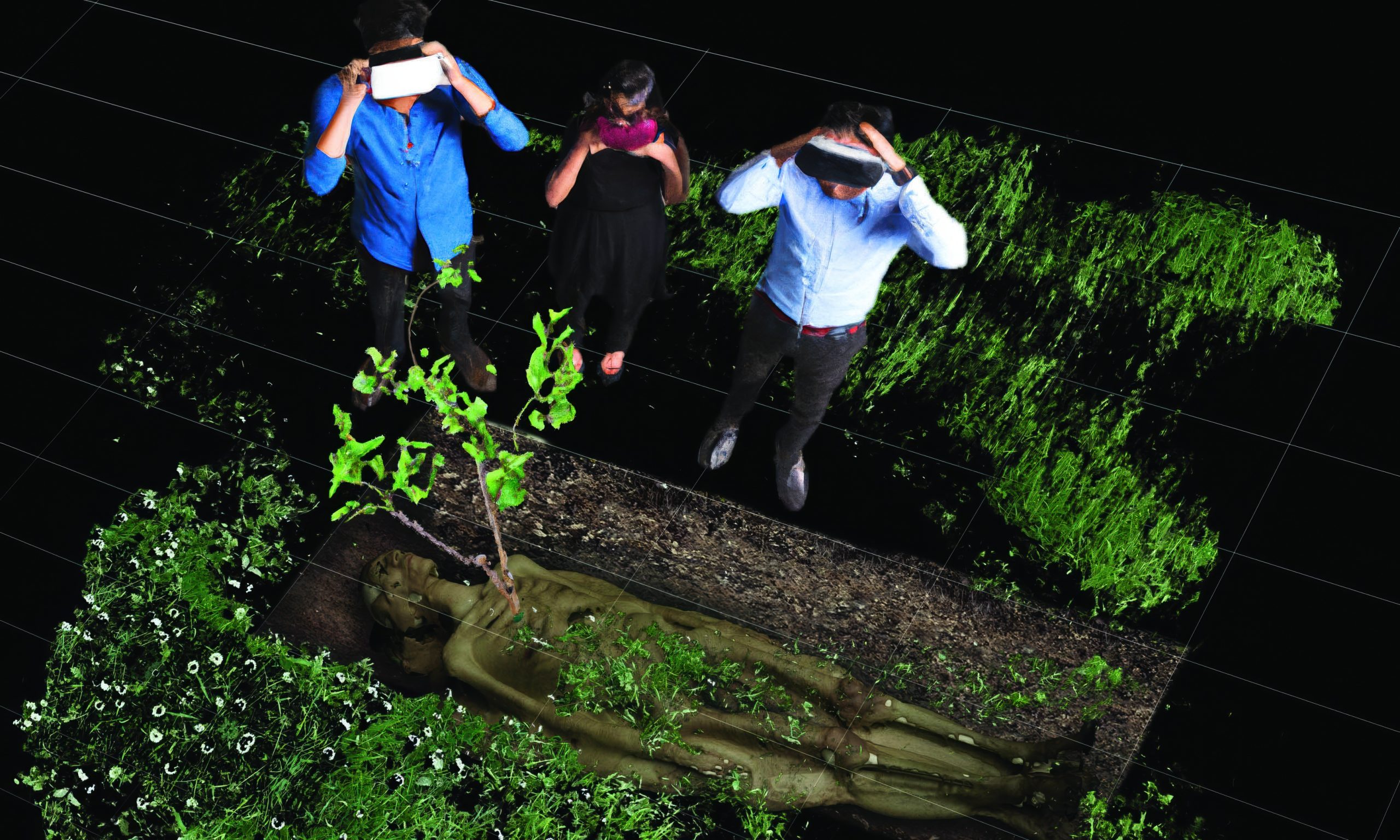
How would our attitudes to death and dying change if we could see how a human body is reabsorbed back into the environment? What kind of visualisation could evoke such a response? The Posthumous World is an interdisciplinary research project about death, dying and our relationship with the planet. At its centre will be a new artwork – a scientifically accurate, visual simulation of a human body being reabsorbed back into the environment after a so-called green burial. The body in question will be the artist’s own. Taking the form of a computer animated, durational sculpture, we will see a radical metamorphosis of the corpse and the end of its human identity. The project team is an interdisciplinary group of artists, forensic and taphonomic scientists (the study of decomposition), body visualisation experts and thanatologists (the study of practices of death and dying). This project has potentially far reaching impacts on death literacy, bereavement support, environmental policy and the future of the funeral industry. For the arts it will develop visual languages that can represent complex organic bodies as well as a model of art and science collaboration. For the wider public, it will be used to initiate a deeper conversation about end-of-life choices and the physical and emotional consequences of death. Research is currently in its initial stages with a projected completion date of 2027. This paper describes the context of the project, its aims and implications.
References:
[1] Outi J Hakola. 2021. Ethical reflections on filming death in end-of-life documentaries. Mortality, 28(3), 395–410.
[2] Harriet Hawkins, and Anja Kanngieser. 2017. Artful climate change communication: overcoming abstractions, insensibilities, and distances. WIREs Climate Change, 8:e472. https://doi.org/10.1002/wcc.472
[3] D W Hopkins, and E G Gregorich. 2005. Carbon as a substrate for soil organisms. In R D Bardgett, M B Ushe and D W Hopkins (Eds). Biodiversityand Function in Soils. British Ecological Society Ecological Reviews, Cambridge University Press. 57-79.
[4] M Pawlett, N T Girkin, L Deeks, D L Evans, R Sakrabani, P Masters, K Garnett, and N M´arquez-Grant. 2024. The contribution of natural burials to soil ecosystem services: Review and emergent research questions. Applied Soil Ecology, 194.
[5] Libby Sallnow, Richard Smith, et al. 2022. Report of the Lancet Commission on The Value of Death: bringing death back into life. The Lancet 399, 837–84.
[6] Catherine Waldby. 2000. The Visible Human Project: Informatic Bodies and Posthuman Medicine. Routledge. London UK.
[7] Tony Walter. 1991. Modern death: taboo or not taboo? Sociology, 252, 293–310.
[8] Tony Walter. 2019. The Pervasive Dead. Mortality, 24, no. 4, 389–404. https://doi.org/10.1080/13576275.2017.1415317



