“Demonstrating Preemptive Action: Accelerating Human Reaction Using Electrical Muscle Stimulation Without Compromising Agency” by Nishida, Kasahara and Lopes
Conference:
Experience Type(s):
Title:
- Demonstrating Preemptive Action: Accelerating Human Reaction Using Electrical Muscle Stimulation Without Compromising Agency
Program Title:
- New Technologies Research & Education Adaptive Technology
Organizer(s)/Presenter(s):
Description:
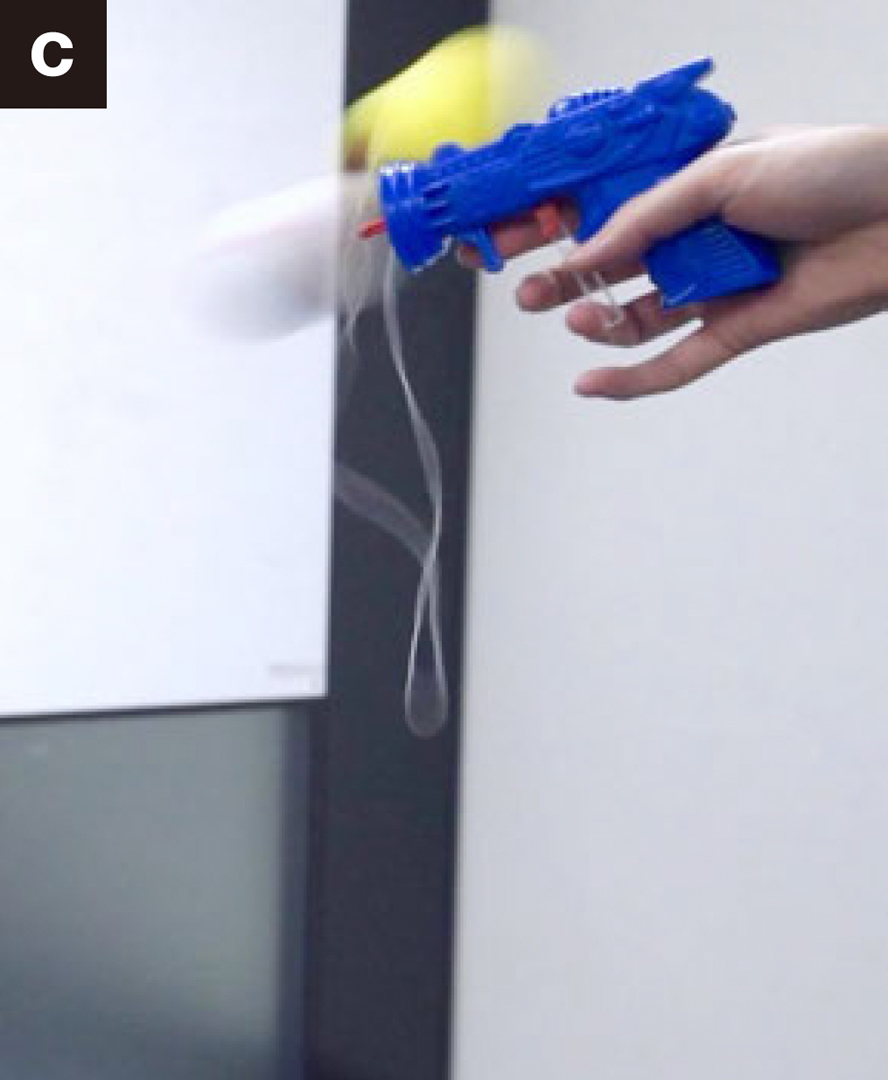
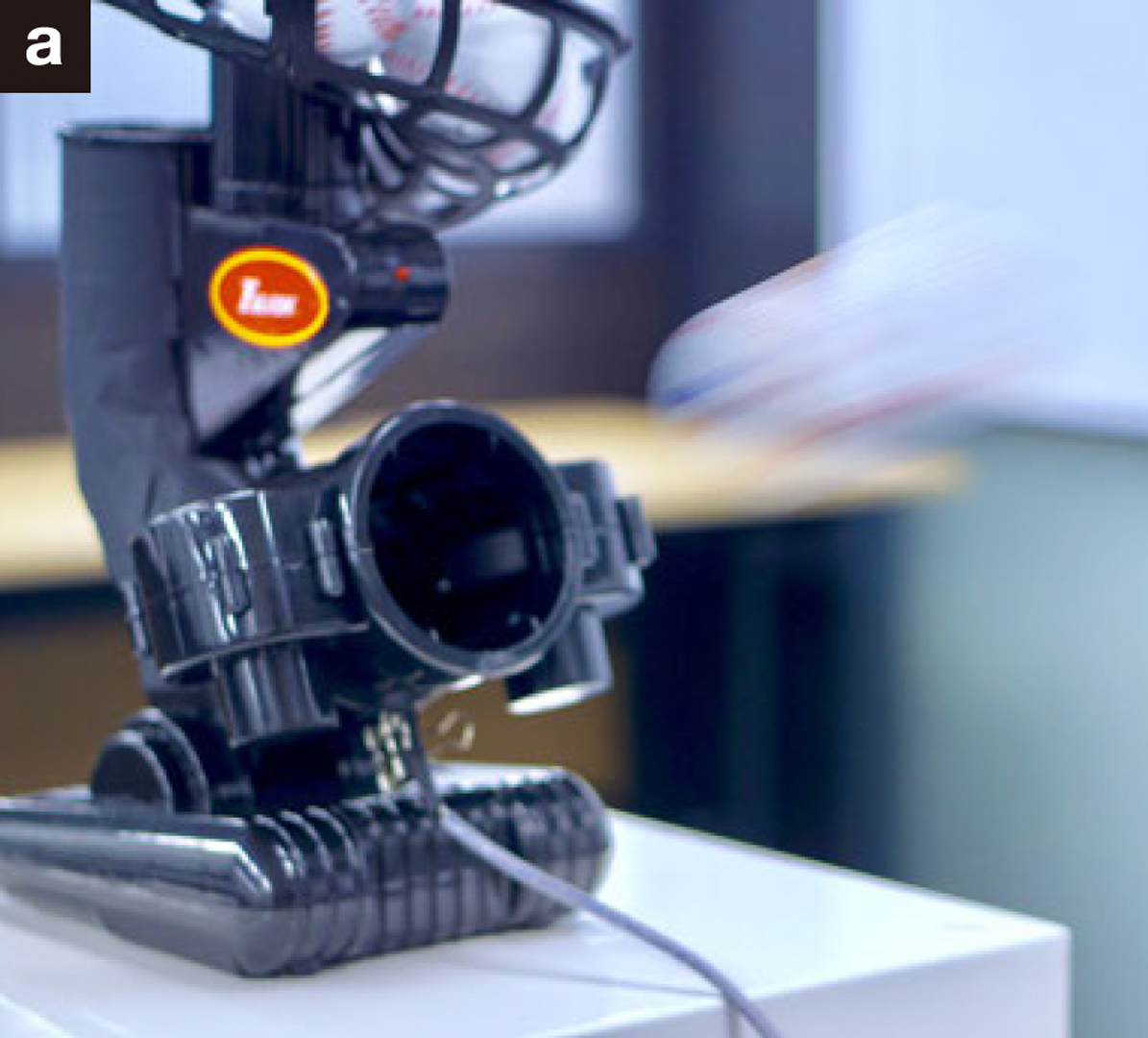
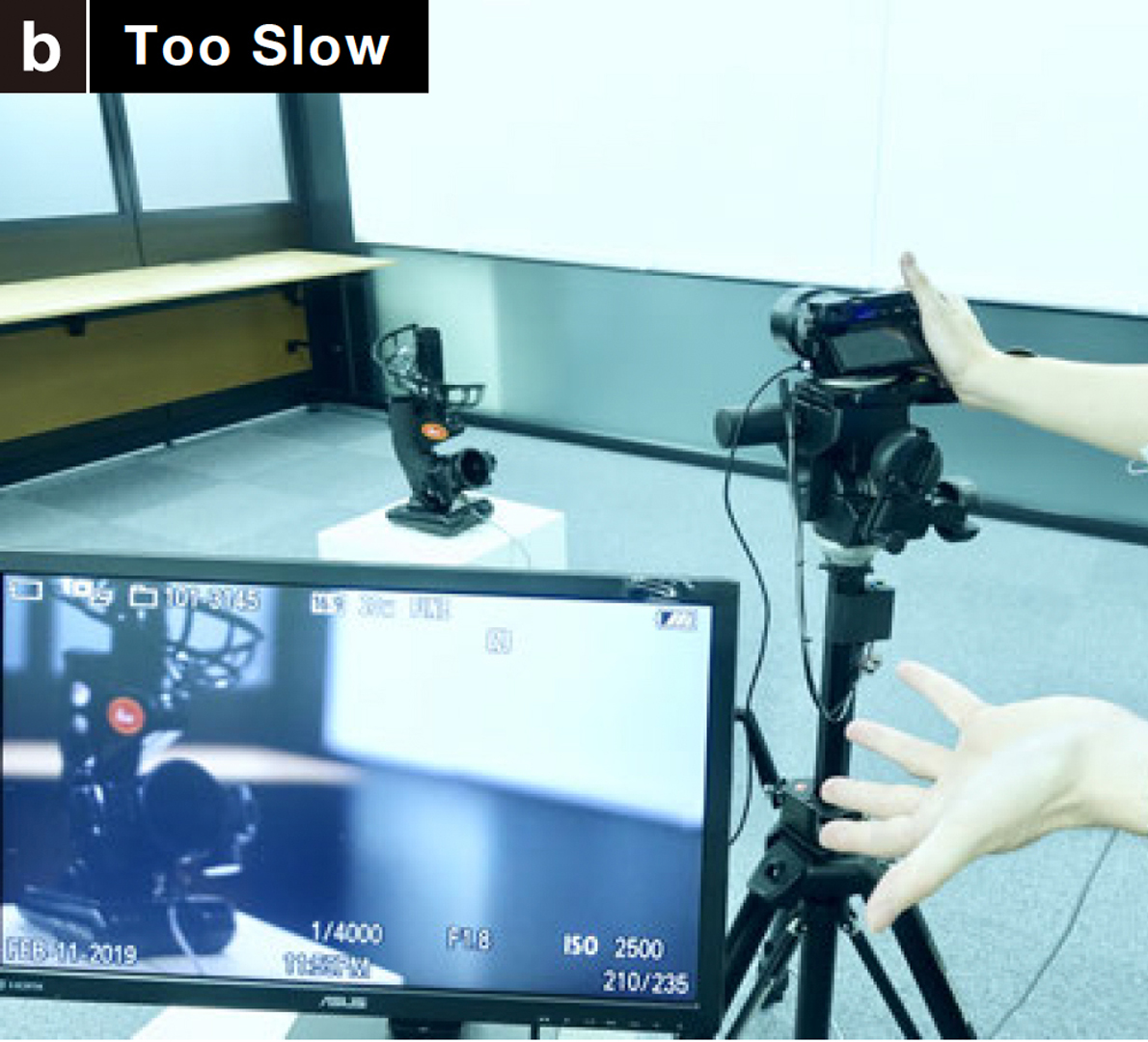
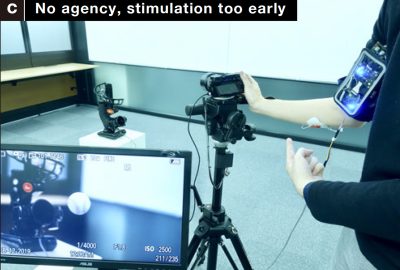
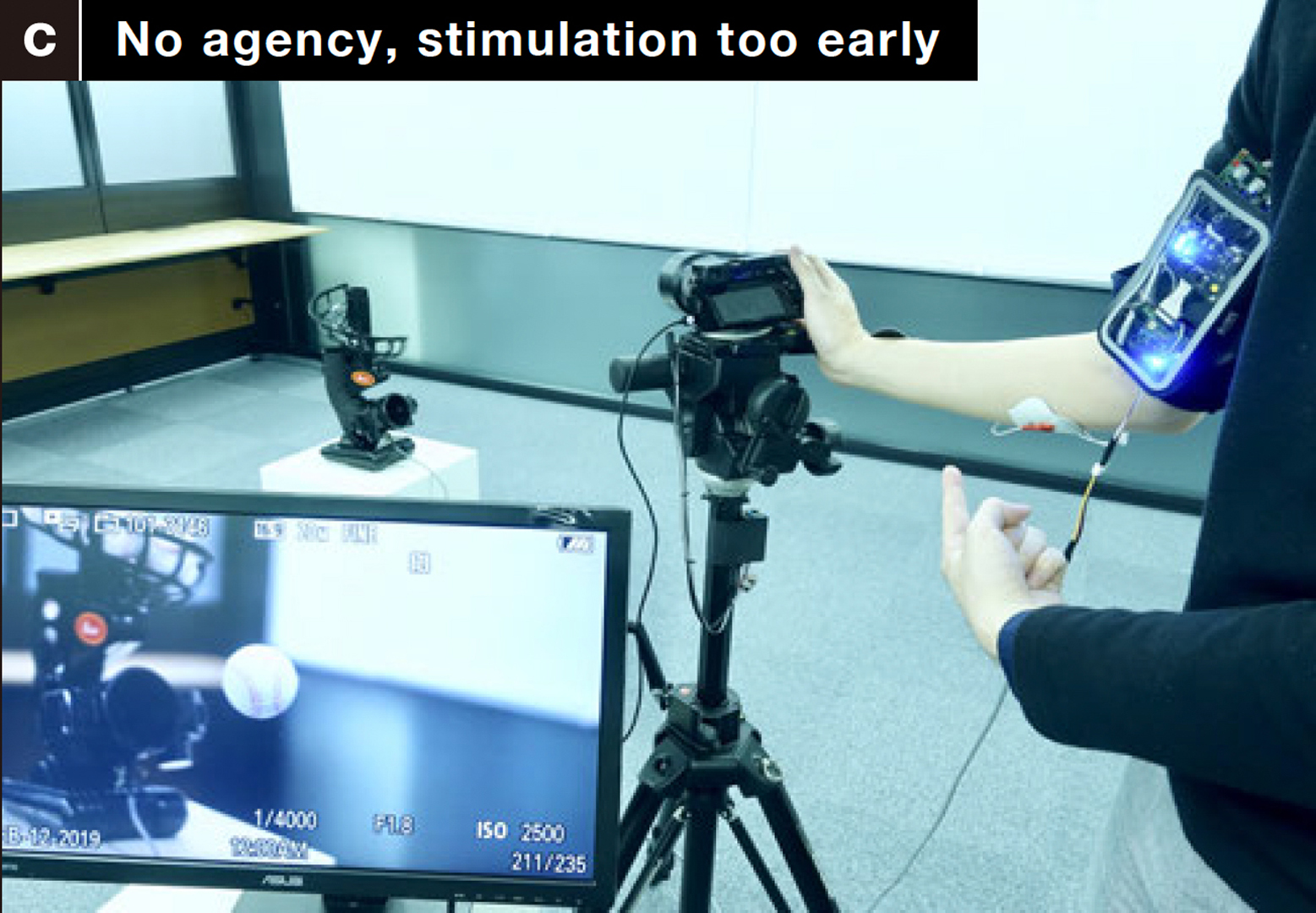
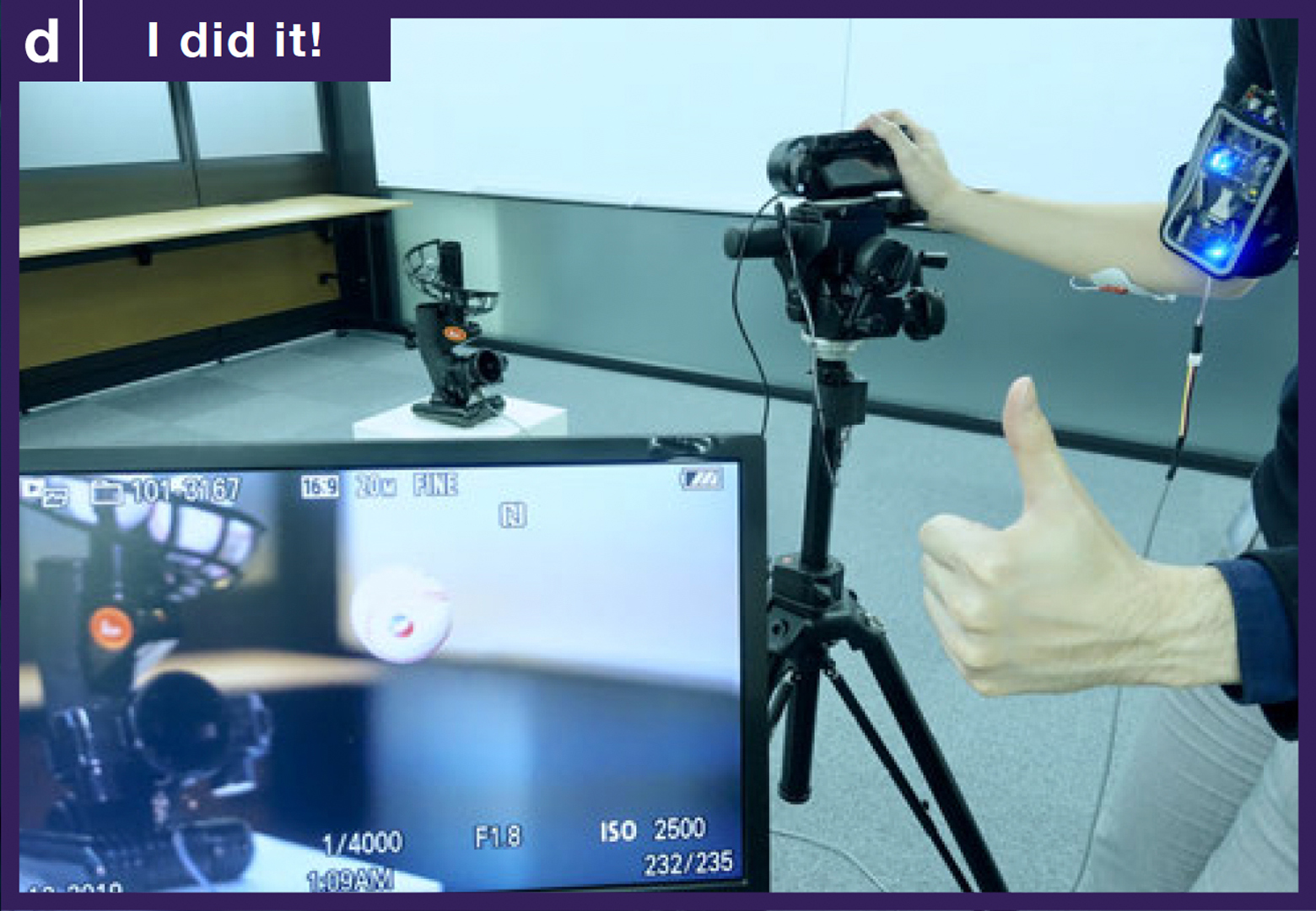
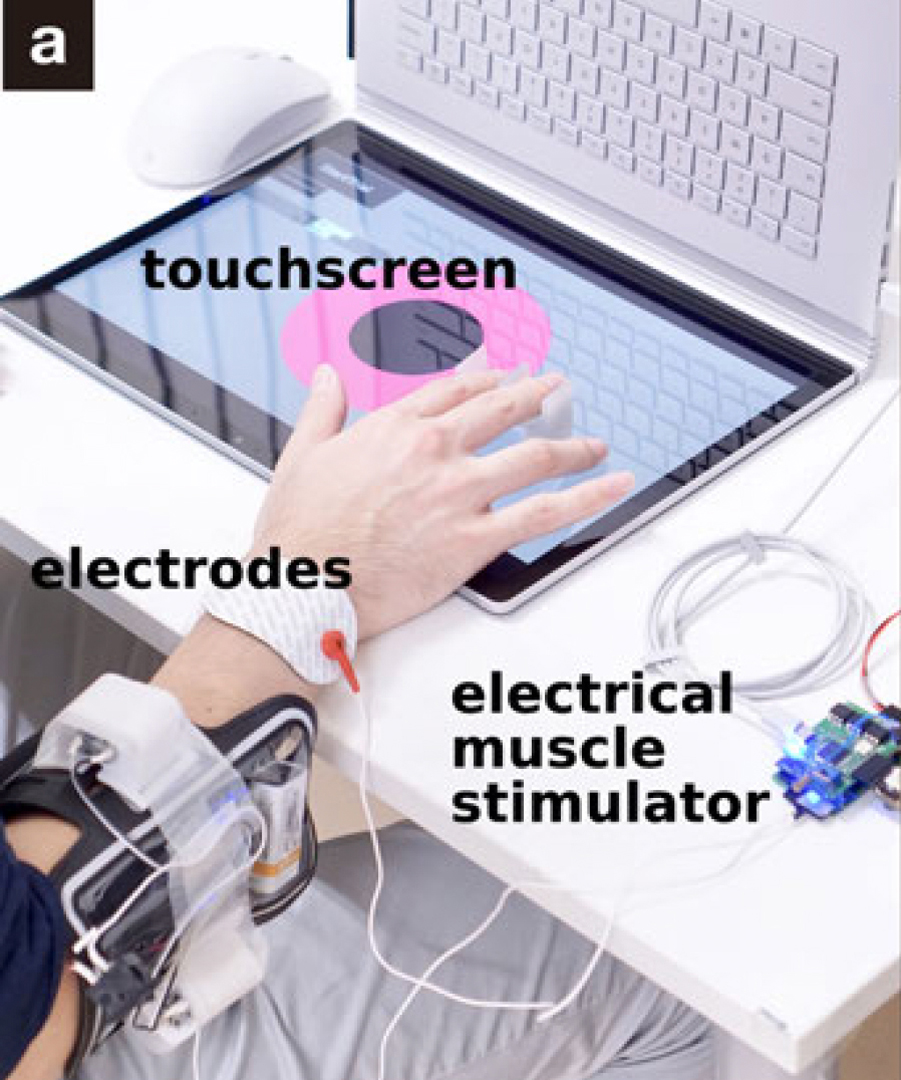
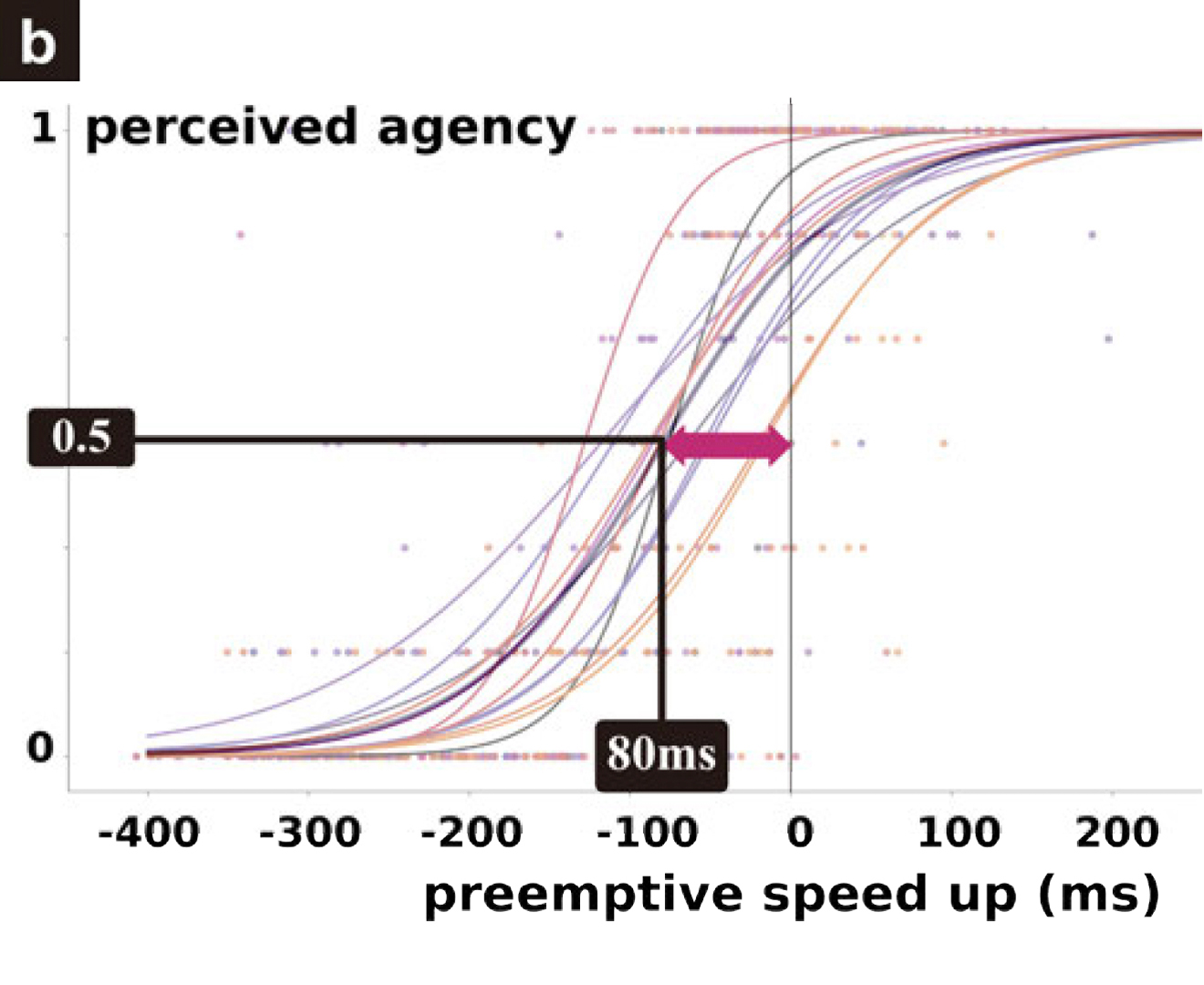
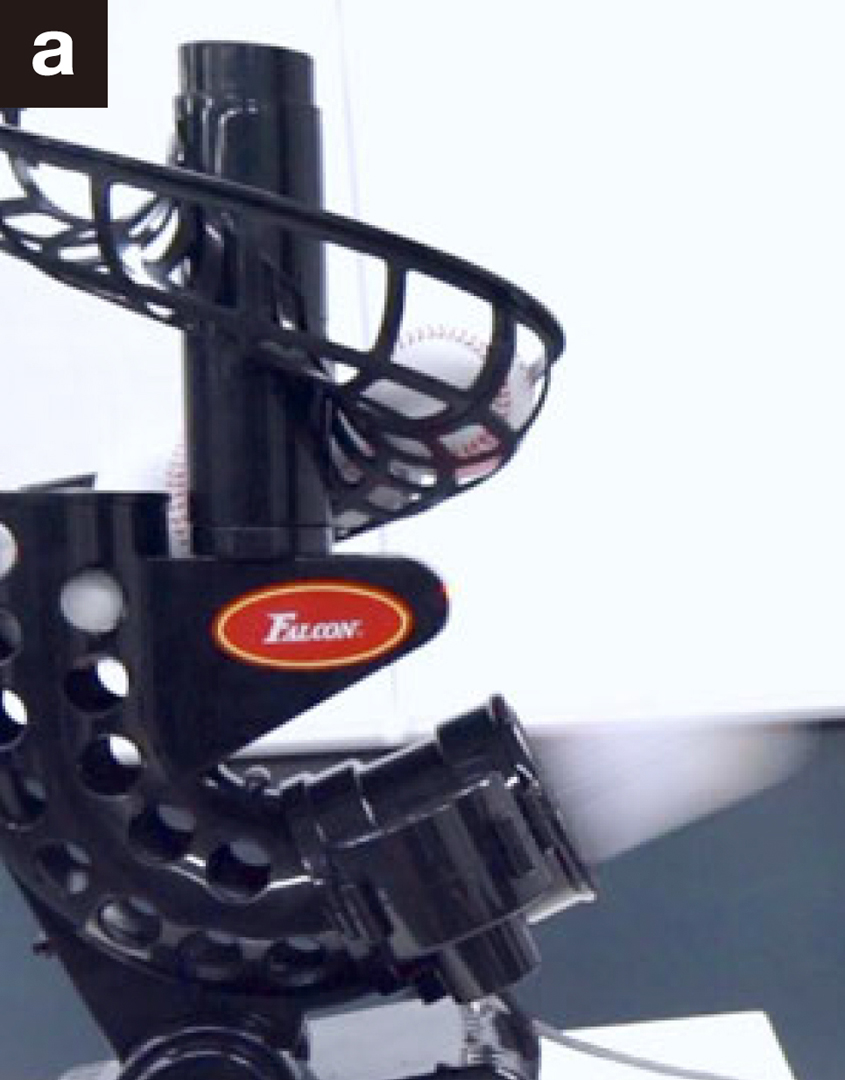
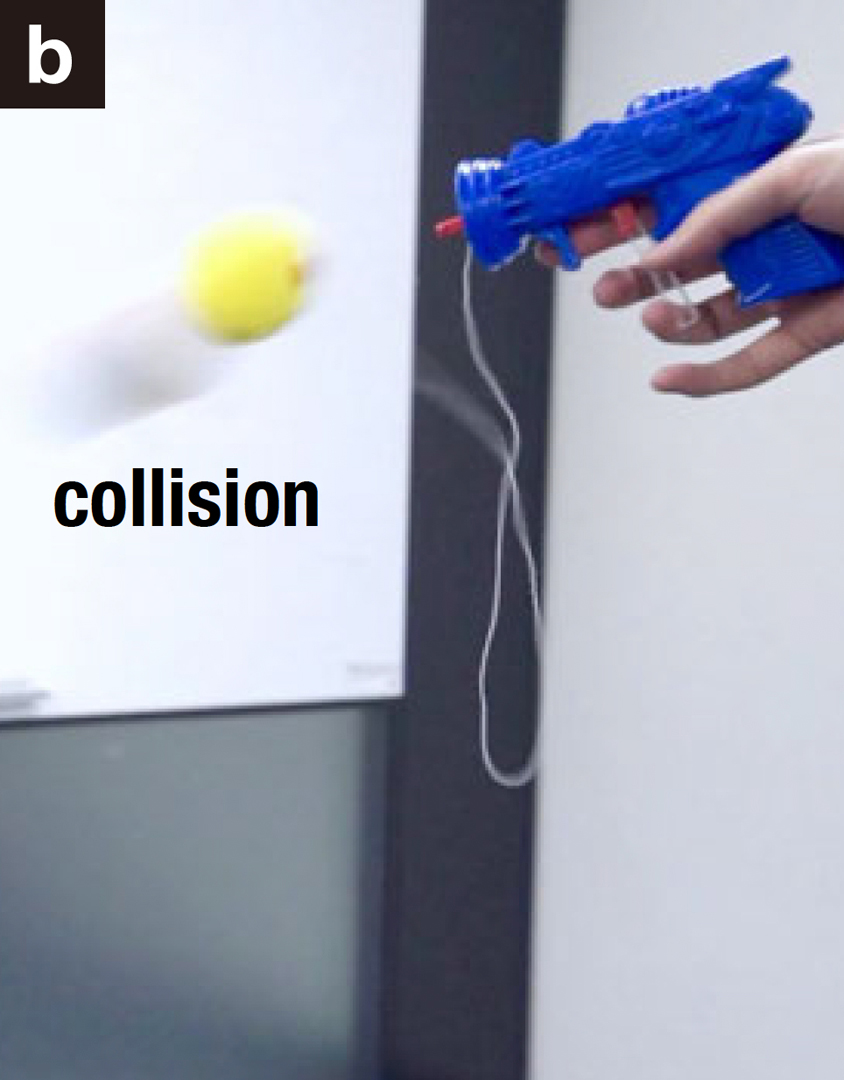
We enable preemptive force-feedback systems to speed up human reaction time without fully compromising the user’s sense of agency by means of electrical muscle stimulation (EMS). We demonstrate this with two example applications: (1) Taking a picture of a high-speed moving object, or (2) hitting a baseball with a toy gun.
References:
[1] Bruno Berberian, Jean-Christophe Sarrazin, Patrick Le Blaye, and Patrick Haggard. 2012. Automation Technology and Sense of Control: A Window on Human Agency. PLOS ONE 7, 3 (March 2012), e34075.
[2] Shunichi Kasahara, Jun Nishida, and Pedro Lopes. 2019. Preemptive Action: Accelerating Human Reaction Using Electrical Muscle Stimulation Without Compromising Agency. In Proceedings of the 2019 CHI Conference on Human Factors in Computing Systems (CHI ’19). ACM, New York, NY, USA, Article 643, 15 pages.
[3] Benjamin Libet. 1985. Unconscious cerebral initiative and the role of conscious will in voluntary action. Behavioral andBrain Sciences 8, 4 (Dec. 1985), 529–539.
[4] Pedro Lopes and Patrick Baudisch. 2017. Interactive Systems Based on Electrical Muscle Stimulation. In ACM SIGGRAPH 2017 Studio (SIGGRAPH ’17). ACM, New York, NY, USA, Article 4, 2 pages.
[5] Masao Matsuhashi and Mark Hallett. 2008. The timing of the conscious intention to move. The European journal of neuroscience 28,11 (Dec. 2008), 2344–2351.
[6] Jun Nishida, Shunichi Kasahara, and Kenji Suzuki. 2017. Wired Muscle: Generating Faster Kinesthetic Reaction by Inter-personally Connecting Muscles. In ACM SIGGRAPH 2017 Emerging Technologies (SIGGRAPH ’17). ACM, New York, NY, USA, Article 26, 2 pages.
Additional Images:
-
- 2019 ETech Nishida: Demonstrating Preemptive Reaction: Accelerating Human Reaction using Electrical Muscle Stimulation Without Compromising Agency
-
- 2019 ETech Nishida: Demonstrating Preemptive Reaction: Accelerating Human Reaction using Electrical Muscle Stimulation Without Compromising Agency
-
- 2019 ETech Nishida: Demonstrating Preemptive Reaction: Accelerating Human Reaction using Electrical Muscle Stimulation Without Compromising Agency
-
- 2019 ETech Nishida: Demonstrating Preemptive Reaction: Accelerating Human Reaction using Electrical Muscle Stimulation Without Compromising Agency
-

- 2019 ETech Nishida: Demonstrating Preemptive Reaction: Accelerating Human Reaction using Electrical Muscle Stimulation Without Compromising Agency
-
- 2019 ETech Nishida: Demonstrating Preemptive Reaction: Accelerating Human Reaction using Electrical Muscle Stimulation Without Compromising Agency
-

- 2019 ETech Nishida: Demonstrating Preemptive Reaction: Accelerating Human Reaction using Electrical Muscle Stimulation Without Compromising Agency