“Dementia Eyes: Perceiving Dementia with Augmented Reality” by Shen, Pai, Kiuchi, Bao, Aoki, et al. …
Conference:
Experience Type(s):
Title:
- Dementia Eyes: Perceiving Dementia with Augmented Reality
Presenter(s):
Description:
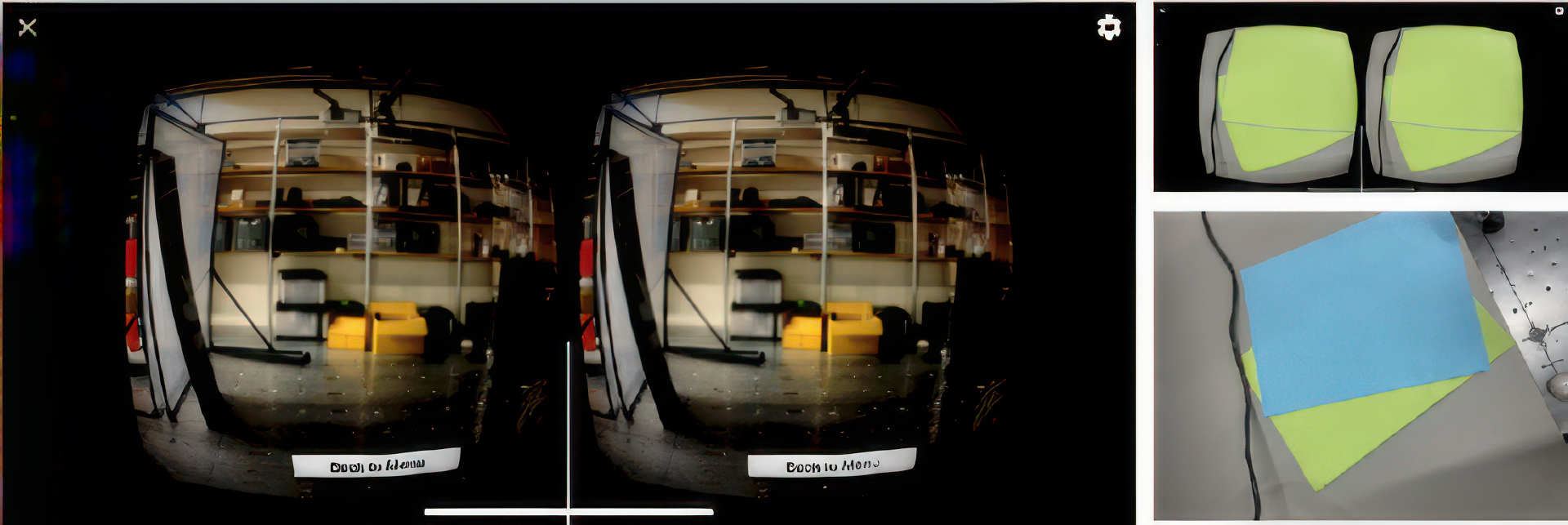
Dementia is a global health crisis, of which there is a need to understand the patients’ perception towards improving their quality of life. Patient understanding of professional medical workers has been proven to be effective in the patient’s quality of life. We propose Dementia Eyes, a mobile Augmented Reality (AR) experience that simulates common visual symptoms of senile dementia based on the known pathology and medical workers’ experience with actual patients. Leveraging an iPhone and a Head-Mounted Display (HMD), we developed an application that allows users to see the world from the perspective of an Alzheimer’s type of dementia (AD) patient in real-time. The experience was validated by professional caregivers and doctors in Japan, and the result advocates for the efficacy of the empathy we intended to bring to the medical workers.
References:
[1] P. Brusini. 2007. Ageing and visual field data. British Journal of Ophthalmology 91, 10 (2007), 1257–1258. https://doi.org/10.1136/bjo.2007.117978
[2] Pratik S. Chougule, Raymond P. Najjar, Maxwell T. Finkelstein, Nagaendran Kandiah, and Dan Milea. 2019. Light-Induced Pupillary Responses in Alzheimer’s Disease. Frontiers in Neurology 10 (2019). https://doi.org/10.3389/fneur.2019.00360
[3] Alice Cronin‐Golomb, Suzanne Corkin, Joseph F. Rizzo, Jennifer Cohen, John H. Growdon, and Kathleen S. Banks. 1991. Visual dysfunction in Alzheimer’s disease: Relation to normal aging. Annals of Neurology 29, 1 (1991), 41–52. https://doi.org/10.1002/ana.410290110
[4] Rebeca I. García-Betances, Viveca Jiménez-Mixco, María T. Arredondo, and María F. Cabrera-Umpiérrez. 2014. Using Virtual Reality for Cognitive Training of the Elderly. American Journal of Alzheimer’s Disease and Other Dementias 30, 1 (Aug 2014), 49–54. https://doi.org/10.1177/1533317514545866
[5] Neil S. Gittings and James L. Fozard. 1986. Age related changes in visual acuity. Experimental Gerontology 21, 4-5 (1986), 423–433. https://doi.org/10.1016/0531-5565(86)90047-1
[6] W Mittenberg. 1994. Impaired depth perception discriminates Alzheimer’s dementia from aging and major depression. Archives of Clinical Neuropsychology 9, 1 (1994), 71–79. https://doi.org/10.1016/0887-6177(94)90015-9
[7] Ji-Sun Paik, Minji Ha, Youn Hea Jung, Gee-Hyun Kim, Kyung-Do Han, Hyun-Seung Kim, Dong Hui Lim, and Kyung-Sun Na. 2020. Low vision and the risk of dementia: a nationwide population-based cohort study. Scientific Reports 10, 1 (2020). https://doi.org/10.1038/s41598-020-66002-z
[8] G. L. Trick and S. E. Silverman. 1991. Visual sensitivity to motion: Age-related changes and deficits in senile dementia of the Alzheimer type. Neurology 41, 9 (1991), 1437–1437. https://doi.org/10.1212/wnl.41.9.1437