“Demonstration of Multi-Layered Inflatables: Asymmetric-Shaped Inflatable Structures by Stacked Planar Sheets” by Sakuma, Sakai, Kawahara and Hiraki
Conference:
Experience Type(s):
Title:
- Demonstration of Multi-Layered Inflatables: Asymmetric-Shaped Inflatable Structures by Stacked Planar Sheets
Organizer(s)/Presenter(s):
Interest Areas(s):
- Research / Education
Description:
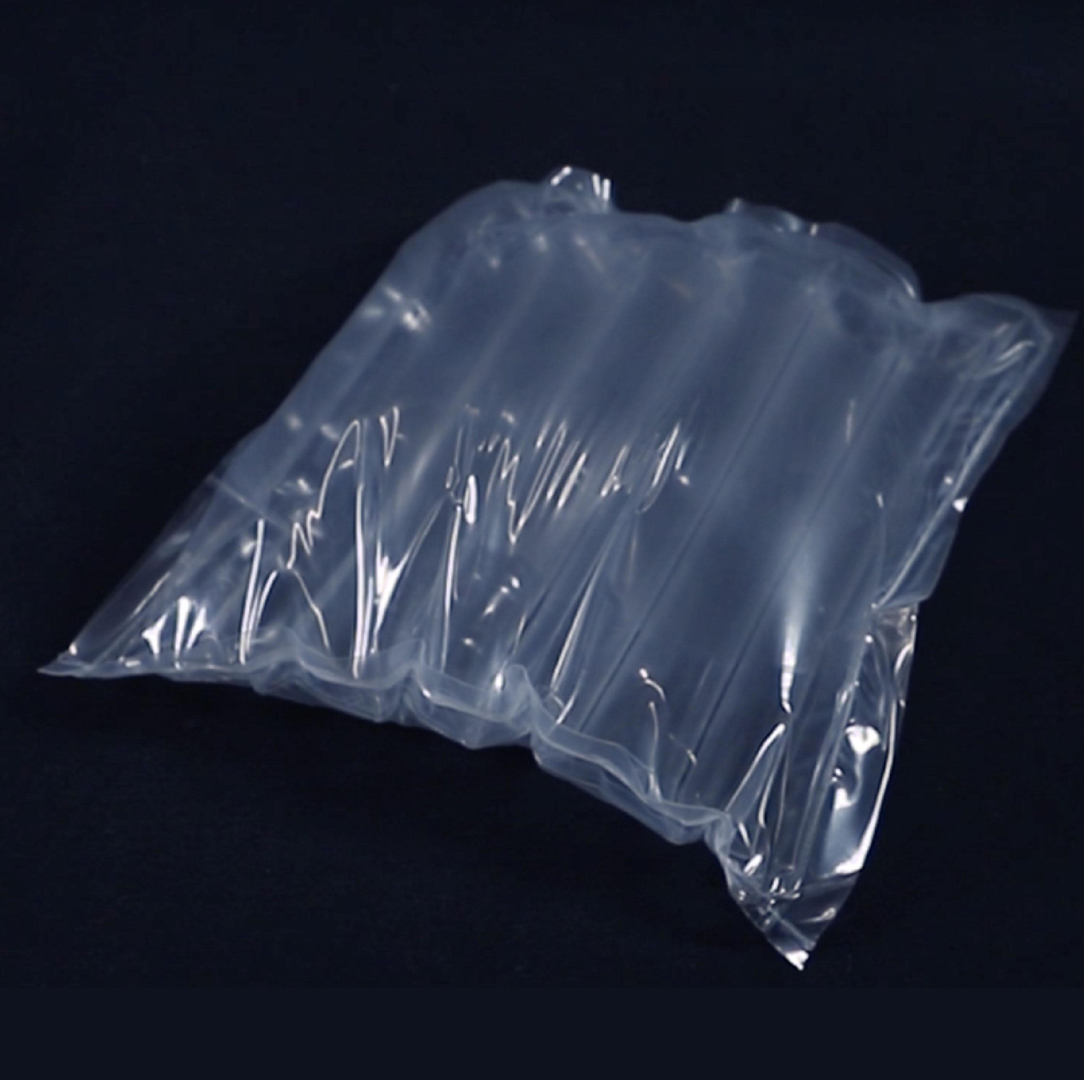
We present “Multi-Layered Inflatables, a novel multi-layered inflatable structure that enables the design and fabrication of complex, asymmetric 3D forms from stacked planar sheets. Our approach employs some thin sheets that are assembled with distinct bonding patterns to form three separate air chambers. Two outer pairs form the external surfaces, while the intermediate chamber serves as an internal layer that reinforces the structure against external forces. By controlling the bonding patterns and independently tuning the pressure in each chamber using a low boiling point liquid (e.g., Novec), we achieve localized in-plane contraction and expansion. This allows us to generate forms such as dome-and-flat hybrids or other non-uniform surfaces—configurations that were previously challenging to obtain with single-layer or conventional methods. Additionally, the internal chamber increases the overall stiffness by counteracting the deformation of the external surfaces. In the hands-on in Siggraph, the attendees can design, and fabricate various types of Multi-Layered Inflatables. At first, the attendees design the fusing and cutting pattern using Rhinoceros. In design, the implemented Grasshopper plugin supports them to generate fusing patterns. In addition to this, they can verify the shape when the designed object is inflated and refine it rapidly. Then, the attendees can try to fabricate the designed object and inflate it. Finally, they can inflate the fabricated object using a dryer or an air pump. As an example of interaction with the objects after fabrication, we expect to apply some loads to them and demonstrate their deformation.
References:
[1] Ryuma Niiyama, Xu Sun, Cynthia Sung, Byoungkwon An, Daniela Rus, and Sangbae Kim. 2015. Pouch Motors: Printable Soft Actuators Integrated with Computational Design. Soft Robotics 2, 2 (June 2015), 59–70.
[2] Yingying Ren, Julian Panetta, Seiichi Suzuki, Uday Kusupati, Florin Isvoranu, and Mark Pauly. 2024. Computational homogenization for inverse design of surface-based inflatables. ACM Trans. Graph. 43, 4 (July 2024), 1–18.
[3] Harpreet Sareen, Udayan Umapathi, Patrick Shin, Yasuaki Kakehi, Jifei Ou, Hiroshi Ishii, and Pattie Maes. 2017. Printflatables: Printing Human-Scale, Functional and Dynamic Inflatable Objects. In Proceedings of the 2017 CHI Conference on Human Factors in Computing Systems(CHI ’17). 3669–3680.
[4] Mélina Skouras, Bernhard Thomaszewski, Peter Kaufmann, Akash Garg, Bernd Bickel, Eitan Grinspun, and Markus Gross. 2014. Designing inflatable structures. ACM Trans. Graph. 33, 4 (July 2014), 1–10.