“Arque: Artificial Biomimicry-Inspired Tail for Extending Innate Body Functions” by Nabeshima, Saraiji and Minamizawa
Conference:
Experience Type(s):
Title:
- Arque: Artificial Biomimicry-Inspired Tail for Extending Innate Body Functions
Program Title:
- New Technologies Research & Education Adaptive Technology
Organizer(s)/Presenter(s):
Description:
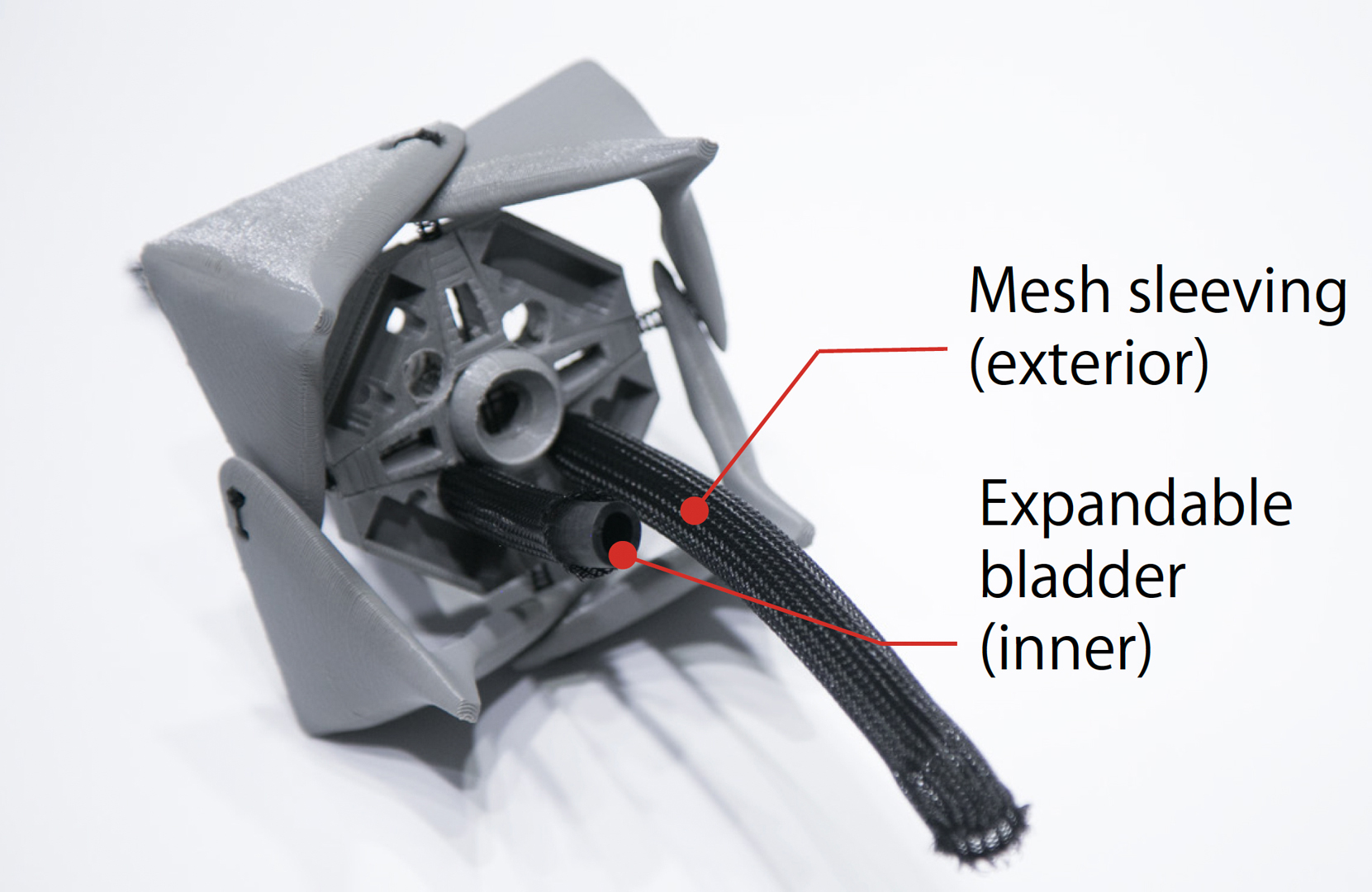
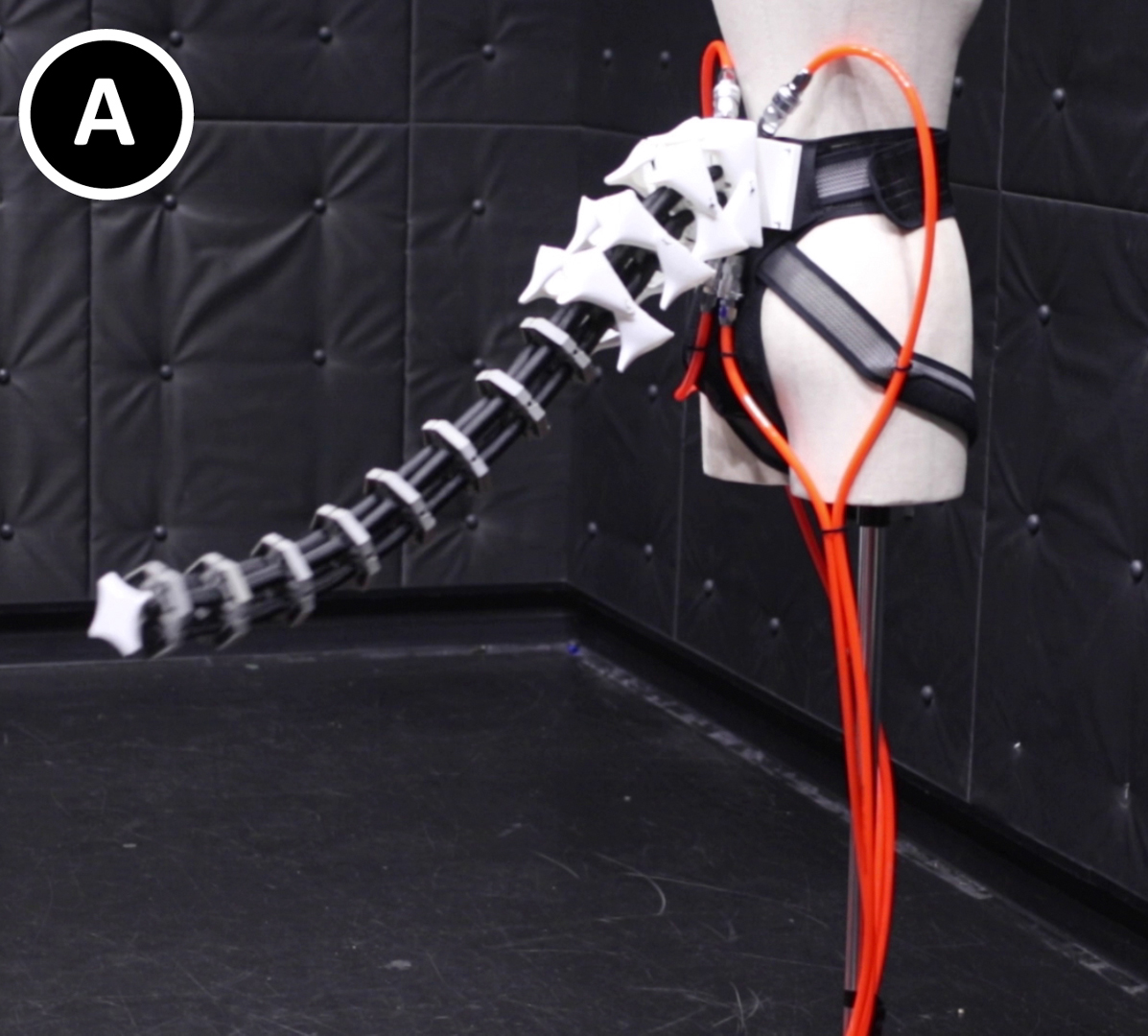
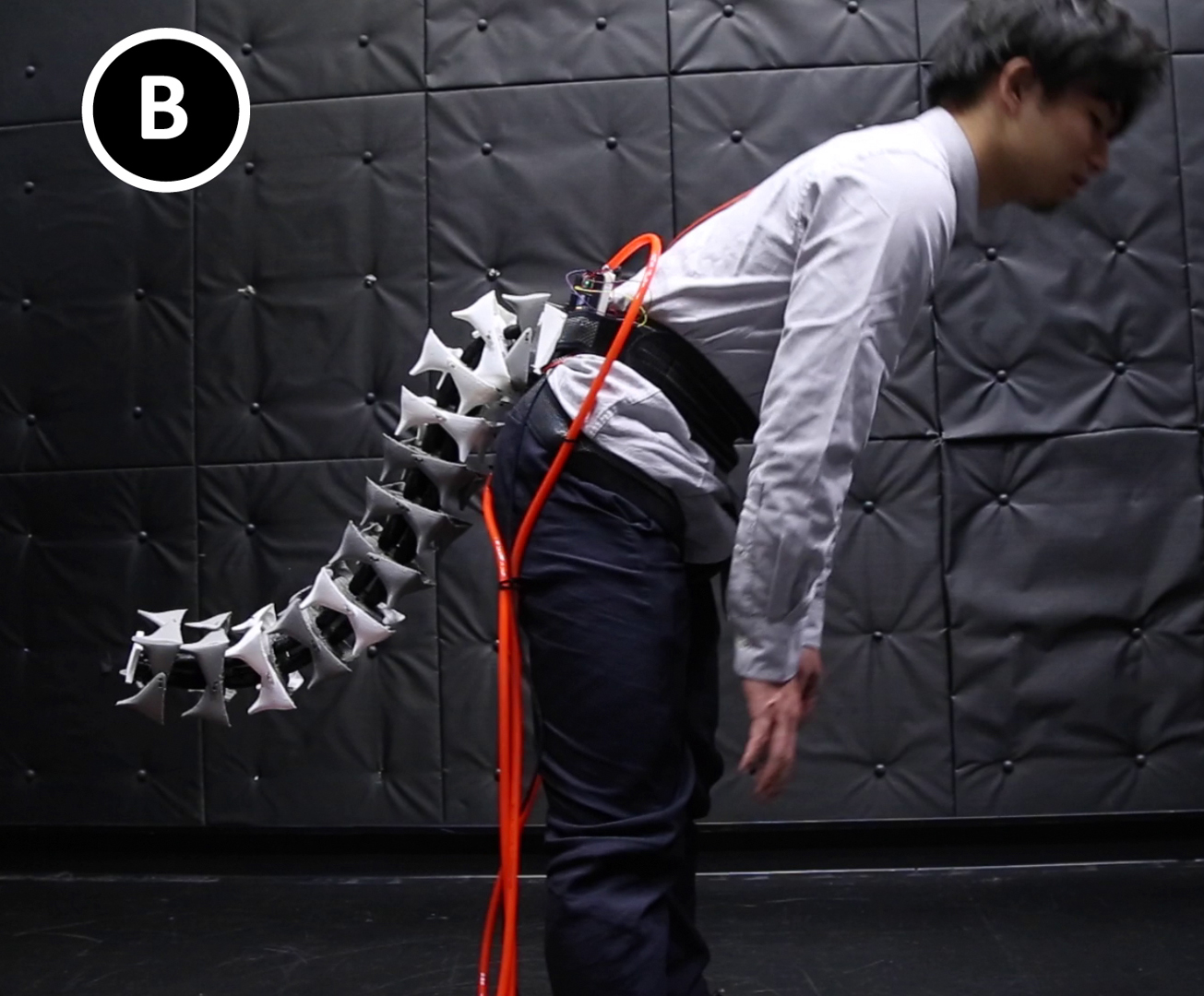
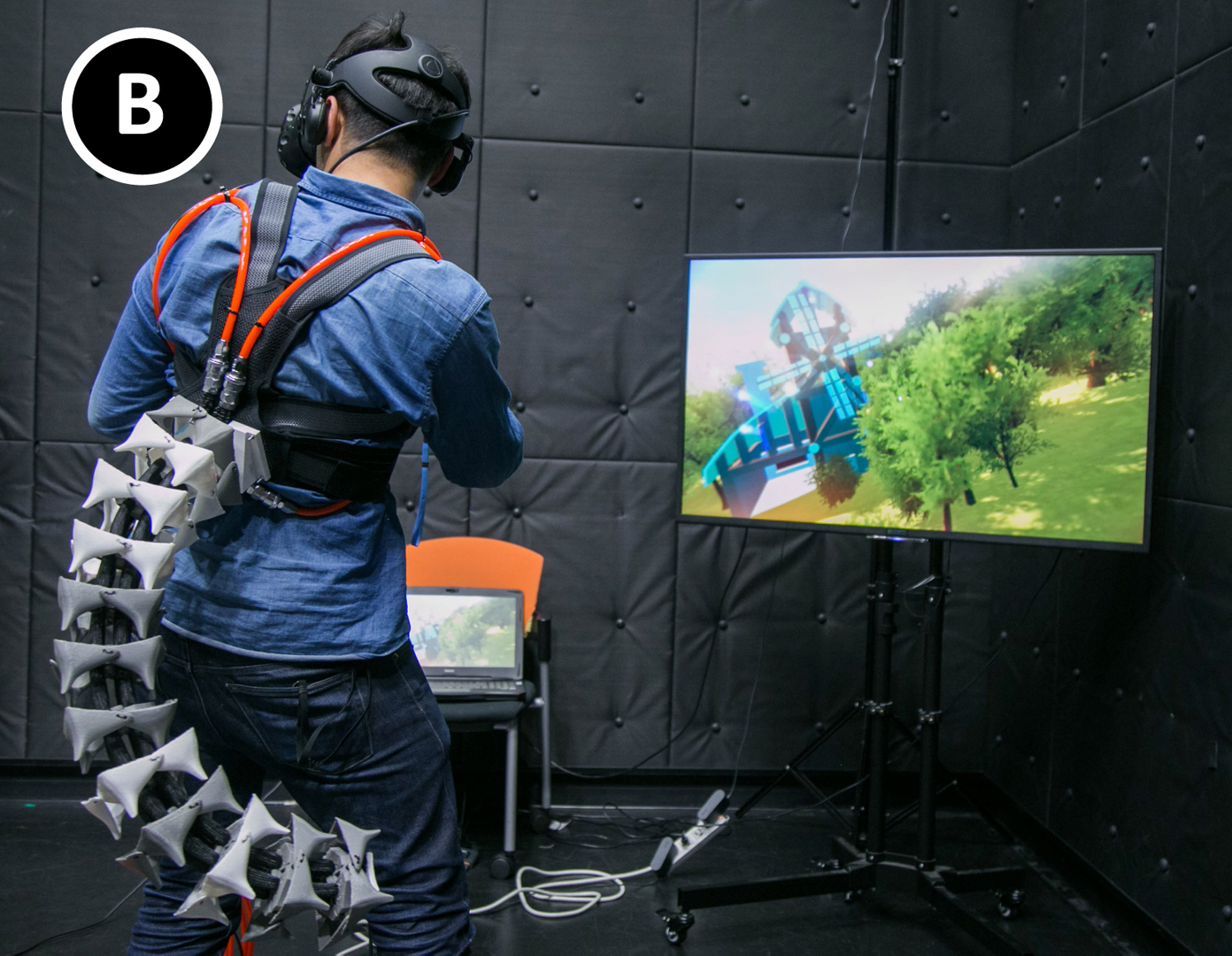
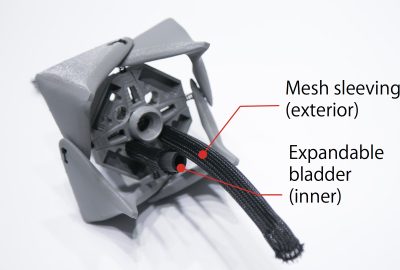
For most vertebrate animals, tail plays an important role for their body, providing variant functions to expand their mobility. In this work, Arque, we propose an artificial biomimicry-inspired anthropomorphic tail to allow us to alter our body momentum for assistive and haptic feedback applications.
References:
[1] Laura Gruss and Daniel Schmitt. 2015. The evolution of the human pelvis: Changing adaptations to bipedalism, obstetrics and thermoregulation. Philosophical transactions of the Royal Society of London. Series B, Biological sciences 370 (03 2015).
[2] Luciana Massaro, Fabrizio Massa, Kathy Simpson, Dorothy Fragaszy, and Elisabetta Visalberghi. 2016. The strategic role of the tail in maintaining balance while carrying a load bipedally in wild capuchins (Sapajus libidinosus): a pilot study. Primates 57 (01 2016).
[3] Michael Porter, Dominique Adriaens, Ross L Hatton, Marc Meyers, and Joanna Mckittrick. 2015. Why the seahorse tail is square. Science (New York, N.Y.) 349 (07 2015).
[4] Domenico Prattichizzo, Monica Malvezzi, Irfan Hussain, and Gionata Salvietti. 2014. The Sixth-Finger: a Modular Extra-Finger to Enhance Human Hand Capabilities. Proceedings – IEEE International Workshop on Robot and Human Interactive Communication 2014.
[5] MHD Yamen Saraiji, Tomoya Sasaki, Kai Kunze, Kouta Minamizawa, and Masahiko Inami. 2018. MetaArms: Body Remapping Using Feet-Controlled Artificial Arms. In The 31st Annual ACM Symposium on User Interface Software and Technology. ACM, 65–74.
[6] Kaori Ujima, Azusa Kadomura, and Ichiro Sio. 2015. GIO: Artificial Tail To Redevelop Vestigial Functions. IPSJ Interaction 2015, 349–354.
[7] Curt Walker, Charles J. Vierck Jr., and Louis A. Ritz. 1998. Balance in the cat: role of the tail and effects of sacrocaudal transection. Behavioural Brain Research 91, 1–2 (March 1998), 41–47.
[8] Christopher K. Zalewski. 2015. Aging of the Human Vestibular System. Seminars in hearing 36 3 (2015), 175–96.
Additional Images:
-
- 2019 ETech Nabeshima: Arque
-
- 2019 ETech Nabeshima: Arque