
“Constructive Solid Geometry on Neural Signed Distance Fields” by Marschner, Sellán, Liu and Jacobson
Conference:
Type(s):
Title:
- Constructive Solid Geometry on Neural Signed Distance Fields
Session/Category Title:
- Neural Shape Representation
Presenter(s)/Author(s):
Abstract:
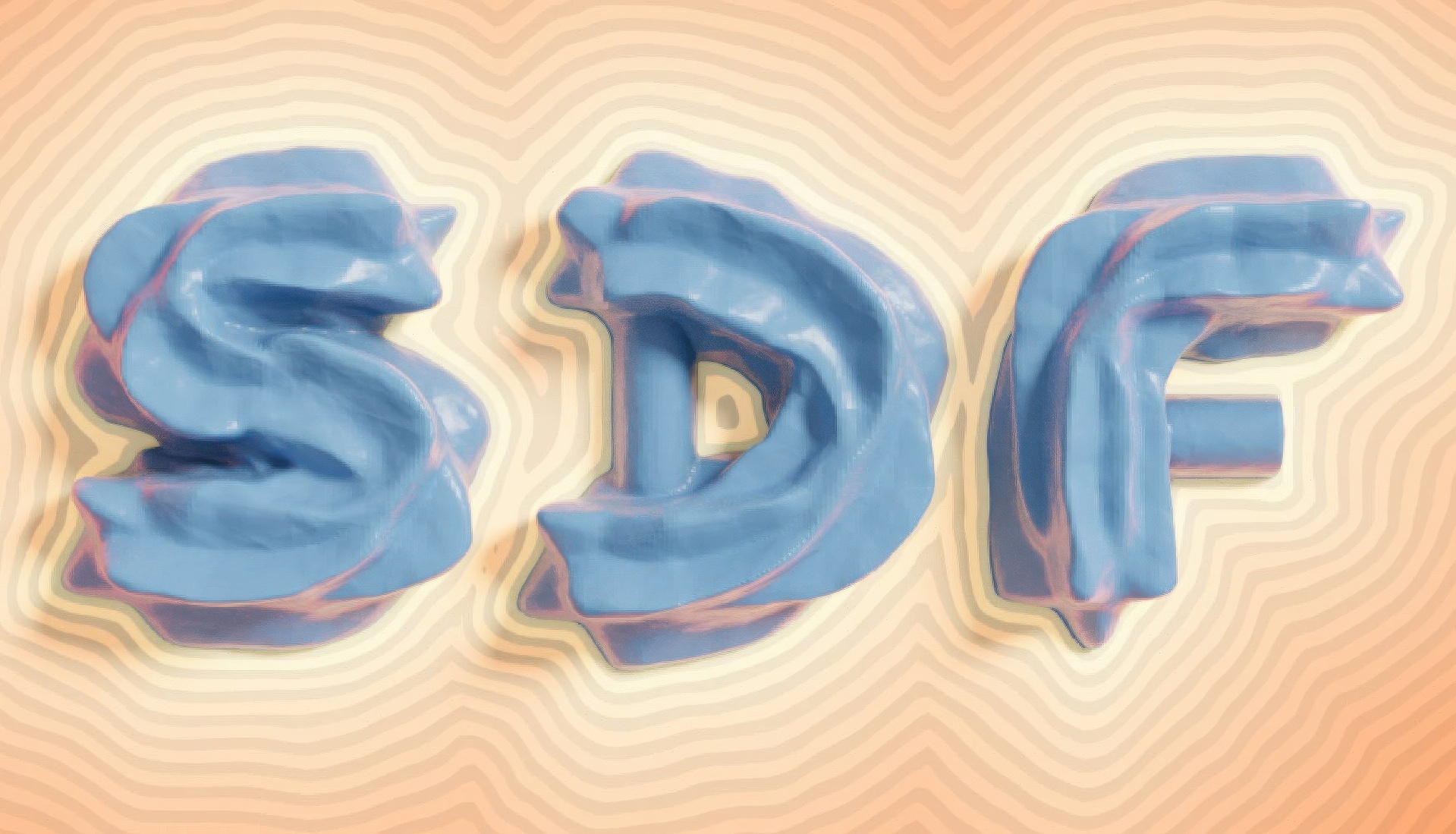
Signed Distance Fields (SDFs) parameterized by neural networks have recently gained popularity as a fundamental geometric representation. However, editing the shape encoded by a neural SDF remains an open challenge. A tempting approach is to leverage common geometric operators (e.g., boolean operations) to edit neural SDFs, but such edits often lead to incorrect non-SDF outputs (which we call Pseudo-SDFs), preventing them from being used for downstream tasks. In this paper, we characterize the space of Pseudo-SDFs, which are eikonal yet not true distance functions, and derive the closest point loss, a novel regularizer that encourages the output to be an exact SDF. We demonstrate the applicability of our regularization to many operations in which traditional methods cause a Pseudo-SDF to arise, such as CSG and swept volumes, and produce a true (neural) SDF for the result of these operations.
References:
[1]
Jad Abou-Chakra, Feras Dayoub, and Niko Sünderhauf. 2022. ParticleNeRF: A Particle-Based Encoding for Online Neural Radiance Fields in Dynamic Scenes. CoRR abs/2211.04041 (2022). https://doi.org/10.48550/arXiv.2211.04041 arXiv:2211.04041
[2]
Steven Abrams and Peter K Allen. 2000. Computing swept volumes. The Journal of Visualization and Computer Animation 11, 2 (2000), 69–82.
[3]
Loïc Barthe, Brian Wyvill, and Erwin De Groot. 2004. Controllable Binary CSG Operators for Soft Objects. International Journal of Shape Modeling 10, 02 (2004), 135–154.
[4]
Arturs Berzins, Moritz Ibing, and Leif Kobbelt. 2023. Neural Implicit Shape Editing using Boundary Sensitivity. CoRR abs/2304.12951 (2023). https://doi.org/10.48550/arXiv.2304.12951 arXiv:2304.12951
[5]
Hanspeter Bieri and Walter Nef. 1988. Elementary set operations with d-dimensional polyhedra. In Computational Geometry and its Applications: CG’88, International Workshop on Computational Geometry Würzburg, FRG, March 24–25, 1988 Proceedings. Springer, 97–112.
[6]
Honglin Chen, Rundi Wu, Eitan Grinspun, Changxi Zheng, and Peter Yichen Chen. 2022. Implicit Neural Spatial Representations for Time-dependent PDEs. CoRR abs/2210.00124 (2022). https://doi.org/10.48550/arXiv.2210.00124 arXiv:2210.00124
[7]
Zhiqin Chen and Hao Zhang. 2019. Learning Implicit Fields for Generative Shape Modeling. Proceedings of IEEE Conference on Computer Vision and Pattern Recognition (CVPR) (2019).
[8]
Julian Chibane, Aymen Mir, and Gerard Pons-Moll. 2020. Neural Unsigned Distance Fields for Implicit Function Learning. In Advances in Neural Information Processing Systems 33: Annual Conference on Neural Information Processing Systems 2020, NeurIPS 2020, December 6-12, 2020, virtual, Hugo Larochelle, Marc’Aurelio Ranzato, Raia Hadsell, Maria-Florina Balcan, and Hsuan-Tien Lin (Eds.).
[9]
Salvatore Cuomo, Vincenzo Schiano Di Cola, Fabio Giampaolo, Gianluigi Rozza, Maziar Raissi, and Francesco Piccialli. 2022. Scientific Machine Learning Through Physics-Informed Neural Networks: Where we are and What’s Next. J. Sci. Comput. 92, 3 (2022), 88. https://doi.org/10.1007/s10915-022-01939-z
[10]
Thomas Davies, Derek Nowrouzezahrai, and Alec Jacobson. 2021. On the Effectiveness of Weight-Encoded Neural Implicit 3D Shapes. arxiv:2009.09808 [cs.GR]
[11]
Tao Du, Jeevana Priya Inala, Yewen Pu, Andrew Spielberg, Adriana Schulz, Daniela Rus, Armando Solar-Lezama, and Wojciech Matusik. 2018. Inversecsg: Automatic conversion of 3d models to csg trees. ACM Transactions on Graphics (TOG) 37, 6 (2018), 1–16.
[12]
Shivam Duggal, Zihao Wang, Wei-Chiu Ma, Sivabalan Manivasagam, Justin Liang, Shenlong Wang, and Raquel Urtasun. 2022. Mending neural implicit modeling for 3d vehicle reconstruction in the wild. In Proceedings of the IEEE/CVF Winter Conference on Applications of Computer Vision. 1900–1909.
[13]
Andreas Fabri and Sylvain Pion. 2009. CGAL: The computational geometry algorithms library. In Proceedings of the 17th ACM SIGSPATIAL international conference on advances in geographic information systems. 538–539.
[14]
Jun Gao, Wenzheng Chen, Tommy Xiang, Alec Jacobson, Morgan McGuire, and Sanja Fidler. 2020. Learning Deformable Tetrahedral Meshes for 3D Reconstruction. In Advances in Neural Information Processing Systems 33: Annual Conference on Neural Information Processing Systems 2020, NeurIPS 2020, December 6-12, 2020, virtual, Hugo Larochelle, Marc’Aurelio Ranzato, Raia Hadsell, Maria-Florina Balcan, and Hsuan-Tien Lin (Eds.). https://proceedings.neurips.cc/paper/2020/hash/7137debd45ae4d0ab9aa953017286b20-Abstract.html
[15]
José Gomes and Olivier Faugeras. 2003. The vector distance functions. International Journal of Computer Vision 52 (2003), 161–187.
[16]
Amos Gropp, Lior Yariv, Niv Haim, Matan Atzmon, and Yaron Lipman. 2020. Implicit Geometric Regularization for Learning Shapes. In Proceedings of the 37th International Conference on Machine Learning, ICML 2020, 13-18 July 2020, Virtual Event(Proceedings of Machine Learning Research, Vol. 119). PMLR, 3789–3799.
[17]
John C Hart. 1996. Sphere tracing: A geometric method for the antialiased ray tracing of implicit surfaces. The Visual Computer 12, 10 (1996), 527–545.
[18]
Kaiming He, Xiangyu Zhang, Shaoqing Ren, and Jian Sun. 2015. Delving Deep into Rectifiers: Surpassing Human-Level Performance on ImageNet Classification. In 2015 IEEE International Conference on Computer Vision, ICCV 2015, Santiago, Chile, December 7-13, 2015. IEEE Computer Society, 1026–1034. https://doi.org/10.1109/ICCV.2015.123
[19]
Amir Hertz, Rana Hanocka, Raja Giryes, and Daniel Cohen-Or. 2020. Deep geometric texture synthesis. ACM Trans. Graph. 39, 4 (2020), 108.
[20]
Edward J. Hu, Yelong Shen, Phillip Wallis, Zeyuan Allen-Zhu, Yuanzhi Li, Shean Wang, Lu Wang, and Weizhu Chen. 2022. LoRA: Low-Rank Adaptation of Large Language Models. In The Tenth International Conference on Learning Representations, ICLR 2022, Virtual Event, April 25-29, 2022. OpenReview.net. https://openreview.net/forum?id=nZeVKeeFYf9
[21]
Kacper Kania, Maciej Zieba, and Tomasz Kajdanowicz. 2020. UCSG-NET-unsupervised discovering of constructive solid geometry tree. Advances in Neural Information Processing Systems 33 (2020), 8776–8786.
[22]
Hiroharu Kato, Yoshitaka Ushiku, and Tatsuya Harada. 2018. Neural 3D Mesh Renderer. In 2018 IEEE Conference on Computer Vision and Pattern Recognition, CVPR 2018, Salt Lake City, UT, USA, June 18-22, 2018. Computer Vision Foundation / IEEE Computer Society, 3907–3916.
[23]
Diederik P. Kingma and Jimmy Ba. 2015. Adam: A Method for Stochastic Optimization. In 3rd International Conference on Learning Representations, ICLR 2015, San Diego, CA, USA, May 7-9, 2015, Conference Track Proceedings, Yoshua Bengio and Yann LeCun (Eds.). http://arxiv.org/abs/1412.6980
[24]
David H Laidlaw, W Benjamin Trumbore, and John F Hughes. 1986. Constructive solid geometry for polyhedral objects. In Proceedings of the 13th annual conference on Computer graphics and interactive techniques. 161–170.
[25]
Minchen Li, Zachary Ferguson, Teseo Schneider, Timothy R Langlois, Denis Zorin, Daniele Panozzo, Chenfanfu Jiang, and Danny M Kaufman. 2020. Incremental potential contact: intersection-and inversion-free, large-deformation dynamics.ACM Trans. Graph. 39, 4 (2020), 49.
[26]
Hsueh-Ti Derek Liu, Francis Williams, Alec Jacobson, Sanja Fidler, and Or Litany. 2022. Learning Smooth Neural Functions via Lipschitz Regularization. In SIGGRAPH ’22: Special Interest Group on Computer Graphics and Interactive Techniques Conference, Vancouver, BC, Canada, August 7 – 11, 2022, Munkhtsetseg Nandigjav, Niloy J. Mitra, and Aaron Hertzmann (Eds.). ACM, 31:1–31:13. https://doi.org/10.1145/3528233.3530713
[27]
Lingjie Liu, Jiatao Gu, Kyaw Zaw Lin, Tat-Seng Chua, and Christian Theobalt. 2020. Neural Sparse Voxel Fields. In Advances in Neural Information Processing Systems 33: Annual Conference on Neural Information Processing Systems 2020, NeurIPS 2020, December 6-12, 2020, virtual, Hugo Larochelle, Marc’Aurelio Ranzato, Raia Hadsell, Maria-Florina Balcan, and Hsuan-Tien Lin (Eds.). https://proceedings.neurips.cc/paper/2020/hash/b4b758962f17808746e9bb832a6fa4b8-Abstract.html
[28]
Shichen Liu, Tianye Li, Weikai Chen, and Hao Li. 2019. Soft rasterizer: A differentiable renderer for image-based 3d reasoning. In Proceedings of the IEEE/CVF International Conference on Computer Vision. 7708–7717.
[29]
Baorui Ma, Zhizhong Han, Yu-Shen Liu, and Matthias Zwicker. 2020. Neural-pull: Learning signed distance functions from point clouds by learning to pull space onto surfaces. arXiv preprint arXiv:2011.13495 (2020).
[30]
U-V Marti and Horst Bunke. 2002. The IAM-database: an English sentence database for offline handwriting recognition. International Journal on Document Analysis and Recognition 5 (2002), 39–46.
[31]
Ishit Mehta, Manmohan Chandraker, and Ravi Ramamoorthi. 2022. A Level Set Theory for Neural Implicit Evolution Under Explicit Flows. In Computer Vision – ECCV 2022 – 17th European Conference, Tel Aviv, Israel, October 23-27, 2022, Proceedings, Part II(Lecture Notes in Computer Science, Vol. 13662), Shai Avidan, Gabriel J. Brostow, Moustapha Cissé, Giovanni Maria Farinella, and Tal Hassner (Eds.). Springer, 711–729. https://doi.org/10.1007/978-3-031-20086-1_41
[32]
Lars M. Mescheder, Michael Oechsle, Michael Niemeyer, Sebastian Nowozin, and Andreas Geiger. 2019. Occupancy Networks: Learning 3D Reconstruction in Function Space. In IEEE Conference on Computer Vision and Pattern Recognition, CVPR 2019, Long Beach, CA, USA, June 16-20, 2019. Computer Vision Foundation / IEEE, 4460–4470.
[33]
Michael Niemeyer, Lars M. Mescheder, Michael Oechsle, and Andreas Geiger. 2019. Occupancy Flow: 4D Reconstruction by Learning Particle Dynamics. In 2019 IEEE/CVF International Conference on Computer Vision, ICCV 2019, Seoul, Korea (South), October 27 – November 2, 2019. IEEE, 5378–5388. https://doi.org/10.1109/ICCV.2019.00548
[34]
Stanley Osher and James A Sethian. 1988. Fronts propagating with curvature-dependent speed: Algorithms based on Hamilton-Jacobi formulations. Journal of computational physics 79, 1 (1988), 12–49.
[35]
Jeong Joon Park, Peter Florence, Julian Straub, Richard A. Newcombe, and Steven Lovegrove. 2019. DeepSDF: Learning Continuous Signed Distance Functions for Shape Representation. In IEEE Conference on Computer Vision and Pattern Recognition, CVPR 2019, Long Beach, CA, USA, June 16-20, 2019. Computer Vision Foundation / IEEE, 165–174.
[36]
Adam Paszke, Sam Gross, Francisco Massa, Adam Lerer, James Bradbury, Gregory Chanan, Trevor Killeen, Zeming Lin, Natalia Gimelshein, Luca Antiga, Alban Desmaison, Andreas Köpf, Edward Z. Yang, Zachary DeVito, Martin Raison, Alykhan Tejani, Sasank Chilamkurthy, Benoit Steiner, Lu Fang, Junjie Bai, and Soumith Chintala. 2019. PyTorch: An Imperative Style, High-Performance Deep Learning Library. In Advances in Neural Information Processing Systems 32: Annual Conference on Neural Information Processing Systems 2019, NeurIPS 2019, December 8-14, 2019, Vancouver, BC, Canada, Hanna M. Wallach, Hugo Larochelle, Alina Beygelzimer, Florence d’Alché-Buc, Emily B. Fox, and Roman Garnett (Eds.). 8024–8035. https://proceedings.neurips.cc/paper/2019/hash/bdbca288fee7f92f2bfa9f7012727740-Abstract.html
[37]
Iñigo Quilez and Pol Jeremias. 2017. Shadertoy. Retrieved March 27 (2017), 2017.
[38]
Marie-Julie Rakotosaona and Maks Ovsjanikov. 2020. Intrinsic Point Cloud Interpolation via Dual Latent Space Navigation. In Computer Vision – ECCV 2020 – 16th European Conference, Glasgow, UK, August 23-28, 2020, Proceedings, Part II(Lecture Notes in Computer Science, Vol. 12347), Andrea Vedaldi, Horst Bischof, Thomas Brox, and Jan-Michael Frahm (Eds.). Springer, 655–672.
[39]
Daniel Rebain, Ke Li, Vincent Sitzmann, Soroosh Yazdani, Kwang Moo Yi, and Andrea Tagliasacchi. 2021. Deep medial fields. arXiv preprint arXiv:2106.03804 (2021).
[40]
Daxuan Ren, Jianmin Zheng, Jianfei Cai, Jiatong Li, Haiyong Jiang, Zhongang Cai, Junzhe Zhang, Liang Pan, Mingyuan Zhang, Haiyu Zhao, and Shuai Yi. 2021. CSG-Stump: A Learning Friendly CSG-Like Representation for Interpretable Shape Parsing. In 2021 IEEE/CVF International Conference on Computer Vision, ICCV 2021, Montreal, QC, Canada, October 10-17, 2021. IEEE, 12458–12467.
[41]
Aristides AG Requicha and Herbert B Voelcker. 1977. Constructive solid geometry. (1977).
[42]
A. Ricci. 1973. A constructive geometry for computer graphics. Comput. J. 16, 2 (01 1973), 157–160.
[43]
Ryan Schmidt and Brian Wyvill. 2005. Implicit sweep surfaces. Department of Computer Science. University of Calgary (2005), 133.
[44]
Ryan Schmidt, Brian Wyvill, Mario Costa Sousa, and Joaquim A Jorge. 2007. Shapeshop: Sketch-based solid modeling with blobtrees. In ACM SIGGRAPH 2007 courses. 43–es.
[45]
Silvia Sellán, Noam Aigerman, and Alec Jacobson. 2021. Swept volumes via spacetime numerical continuation. ACM Transactions on Graphics (TOG) 40, 4 (2021), 1–11.
[46]
Silvia Sellán, Christopher Batty, and Oded Stein. 2023. Reach For the Spheres: Tangency-Aware Surface Reconstruction of SDFs. arXiv preprint arXiv:2308.09813 (2023).
[47]
Gopal Sharma, Rishabh Goyal, Difan Liu, Evangelos Kalogerakis, and Subhransu Maji. 2018. Csgnet: Neural shape parser for constructive solid geometry. In Proceedings of the IEEE Conference on Computer Vision and Pattern Recognition. 5515–5523.
[48]
Towaki Takikawa, Andrew Glassner, and Morgan McGuire. 2022. A Dataset and Explorer for 3D Signed Distance Functions. Journal of Computer Graphics Techniques (JCGT) 11, 2 (27 April 2022), 1–29. http://jcgt.org/published/0011/02/01/
[49]
Towaki Takikawa, Joey Litalien, Kangxue Yin, Karsten Kreis, Charles Loop, Derek Nowrouzezahrai, Alec Jacobson, Morgan McGuire, and Sanja Fidler. 2021. Neural Geometric Level of Detail: Real-Time Rendering With Implicit 3D Shapes. In IEEE Conference on Computer Vision and Pattern Recognition, CVPR 2021, virtual, June 19-25, 2021. Computer Vision Foundation / IEEE, 11358–11367.
[50]
Petros Tzathas, Petros Maragos, and Anastasios Roussos. 2023. 3D Neural Sculpting (3DNS): Editing Neural Signed Distance Functions. In IEEE/CVF Winter Conference on Applications of Computer Vision, WACV 2023, Waikoloa, HI, USA, January 2-7, 2023. IEEE, 4510–4519. https://doi.org/10.1109/WACV56688.2023.00450
[51]
Rahul Venkatesh, Tejan Karmali, Sarthak Sharma, Aurobrata Ghosh, R. Venkatesh Babu, László A. Jeni, and Maneesh Singh. 2021. Deep Implicit Surface Point Prediction Networks. In 2021 IEEE/CVF International Conference on Computer Vision, ICCV 2021, Montreal, QC, Canada, October 10-17, 2021. IEEE, 12633–12642.
[52]
Nanyang Wang, Yinda Zhang, Zhuwen Li, Yanwei Fu, Wei Liu, and Yu-Gang Jiang. 2018. Pixel2Mesh: Generating 3D Mesh Models from Single RGB Images. In Computer Vision – ECCV 2018 – 15th European Conference, Munich, Germany, September 8-14, 2018, Proceedings, Part XI(Lecture Notes in Computer Science, Vol. 11215), Vittorio Ferrari, Martial Hebert, Cristian Sminchisescu, and Yair Weiss (Eds.). Springer, 55–71.
[53]
Brian Wyvill, Andrew Guy, and Eric Galin. 1999. Extending the csg tree. warping, blending and boolean operations in an implicit surface modeling system. In Computer Graphics Forum, Vol. 18. Wiley Online Library, 149–158.
[54]
Brian Wyvill and Kees Van Overveld. 1997. Warping as a modelling tool for csg/implicit models. In Proceedings of 1997 International Conference on Shape Modeling and Applications. IEEE, 205–213.
[55]
Yiheng Xie, Towaki Takikawa, Shunsuke Saito, Or Litany, Shiqin Yan, Numair Khan, Federico Tombari, James Tompkin, Vincent Sitzmann, and Srinath Sridhar. 2021. Neural Fields in Visual Computing and Beyond. CoRR abs/2111.11426 (2021). arXiv:2111.11426
[56]
Guandao Yang, Serge J. Belongie, Bharath Hariharan, and Vladlen Koltun. 2021. Geometry Processing with Neural Fields. In Advances in Neural Information Processing Systems 34: Annual Conference on Neural Information Processing Systems 2021, NeurIPS 2021, December 6-14, 2021, virtual, Marc’Aurelio Ranzato, Alina Beygelzimer, Yann N. Dauphin, Percy Liang, and Jennifer Wortman Vaughan (Eds.). 22483–22497.
[57]
Fenggen Yu, Qimin Chen, Maham Tanveer, Ali Mahdavi Amiri, and Hao Zhang. 2023. DualCSG: Learning Dual CSG Trees for General and Compact CAD Modeling. https://arxiv.org/abs/2301.11497
[58]
Fenggen Yu, Zhiqin Chen, Manyi Li, Aditya Sanghi, Hooman Shayani, Ali Mahdavi-Amiri, and Hao Zhang. 2022. CAPRI-Net: learning compact CAD shapes with adaptive primitive assembly. In Proceedings of the IEEE/CVF Conference on Computer Vision and Pattern Recognition. 11768–11778.
[59]
Paul Zhang, Dmitriy Smirnov, and Justin Solomon. 2022. Wassersplines for Neural Vector Field-Controlled Animation. Comput. Graph. Forum 41, 8 (2022), 31–41. https://doi.org/10.1111/cgf.14621
[60]
Xinyu Zhang, Young J Kim, and Dinesh Manocha. 2009. Reliable sweeps. In 2009 SIAM/ACM joint conference on geometric and physical modeling. 373–378.



