
“Nonlinear Ray Tracing for Displacement and Shell Mapping” by Ogaki
Conference:
Type(s):
Title:
- Nonlinear Ray Tracing for Displacement and Shell Mapping
Session/Category Title:
- What're Your Points?
Presenter(s)/Author(s):
Abstract:
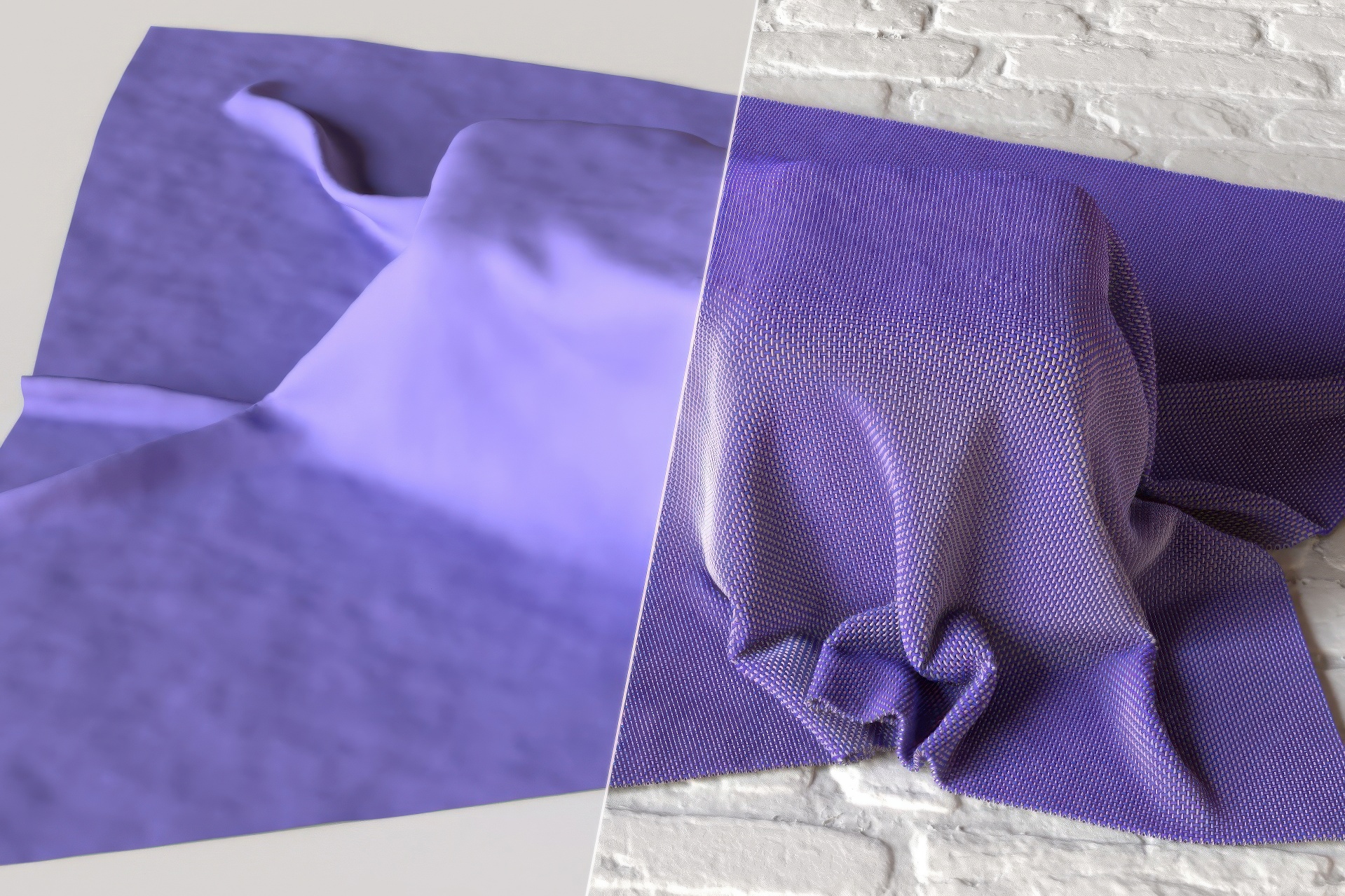
Displacement mapping and shell mapping add fine-scale geometric features to meshes and can significantly enhance the realism of an object’s surface representation. Both methods generate geometry within a layer between a base mesh and its offset mesh called a shell. It is not easy to simultaneously achieve high ray tracing performance, low memory consumption, interactive feedback, and ease of implementation, partly because the mapping between shell and texture space is nonlinear. This paper introduces a new efficient approach to perform acceleration structure traversal and intersection tests against micro-triangles entirely in texture space by formulating nonlinear rays as degree-2 rational functions. Our method simplifies the implementation of tessellation-free displacement mapping and smooth shell mapping and works even if base mesh triangles degenerate in UV space.
References:
[1]
Carsten Benthin and Christoph Peters. 2023. Real-Time Ray Tracing of Micro-Poly Geometry with Hierarchical Level of Detail. Computer Graphics Forum 42, 8 (2023), e14868. https://doi.org/10.1111/cgf.14868 arXiv:https://onlinelibrary.wiley.com/doi/pdf/10.1111/cgf.14868
[2]
Carsten Benthin, Karthik Vaidyanathan, and Sven Woop. 2021. Ray Tracing Lossy Compressed Grid Primitives. In Eurographics 2021 – Short Papers, Holger Theisel and Michael Wimmer (Eds.). The Eurographics Association. https://doi.org/10.2312/egs.20211009
[3]
Carsten Benthin, Sven Woop, Matthias Nießner, Kai Selgrad, and Ingo Wald. 2015. Efficient Ray Tracing of Subdivision Surfaces Using Tessellation Caching. In Proceedings of the 7th Conference on High-Performance Graphics (Los Angeles, California) (HPG ’15). Association for Computing Machinery, New York, NY, USA, 5–12. https://doi.org/10.1145/2790060.2790061
[4]
Brent Burley, David Adler, Matt Jen-Yuan Chiang, Hank Driskill, Ralf Habel, Patrick Kelly, Peter Kutz, Yining Karl Li, and Daniel Teece. 2018. The Design and Evolution of Disney’s Hyperion Renderer. ACM Transaction on Graphics 37, 3 (2018), 33:1–33:22.
[5]
Chen Cao, Zhong Ren, Baining Guo, and Kun Zhou. 2010. Interactive Rendering of Non-Constant, Refractive Media Using the Ray Equations of Gradient-Index Optics. In Proceedings of the 21st Eurographics Conference on Rendering (Saarbrücken, Germany) (EGSR’10). Eurographics Association, Goslar, DEU, 1375–1382. https://doi.org/10.1111/j.1467-8659.2010.01733.x
[6]
Per Christensen, Julian Fong, Jonathan Shade, Wayne Wooten, Brenden Schubert, Andrew Kensler, Stephen Friedman, Charlie Kilpatrick, Cliff Ramshaw, Marc Bannister, Brenton Rayner, Jonathan Brouillat, and Max Liani. 2018. RenderMan: An Advanced Path-Tracing Architecture for Movie Rendering. ACM Transanctions on Graphics 37, 3 (2018), 30:1–30:21.
[7]
Per H. Christensen, Julian Fong, David M. Laur, and Dana Batali. 2006. Ray Tracing for the Movie ‘Cars’. In 2006 IEEE Symposium on Interactive Ray Tracing. 1–6. https://doi.org/10.1109/RT.2006.280208
[8]
David Cox, John Little, and Donal O’Shea. 2007. Ideals, Varieties, and Algorithms. An Introduction to Computational Algebraic Geometry and Commutative Algebra. Springer New York, NY. https://link.springer.com/book/10.1007/978-0-387-35651-8
[9]
Luca Fascione, Johannes Hanika, Mark Leone, Marc Droske, Jorge Schwarzhaupt, Tomáš Davidovič, Andrea Weidlich, and Johannes Meng. 2018. Manuka: A Batch-Shading Architecture for Spectral Path Tracing in Movie Production. ACM Transactions on Graphics 37, 3 (2018), 31:1–31:18.
[10]
Iliyan Georgiev, Thiago Ize, Mike Farnsworth, Ramón Montoya-Vozmediano, Alan King, Brecht Van Lommel, Angel Jimenez, Oscar Anson, Shinji Ogaki, Eric Johnston, Adrien Herubel, Declan Russell, Frédéric Servant, and Marcos Fajardo. 2018. Arnold: A Brute-Force Production Path Tracer. ACM Transactions on Graphics 37, 3 (2018), 32:1–32:12.
[11]
Christiaan Gribble. 2021. Curved Ray Traversal. Apress, Berkeley, CA, 569–597. https://doi.org/10.1007/978-1-4842-7185-8_36
[12]
Thiago Ize. 2013. Robust BVH Ray Traversal. Journal of Computer Graphics Techniques (JCGT) 2, 2 (19 July 2013), 12–27. http://jcgt.org/published/0002/02/02/
[13]
Stefan Jeschke, Stephan Mantler, and Michael Wimmer. 2007. Interactive Smooth and Curved Shell Mapping. In Proceedings of the 18th Eurographics Conference on Rendering Techniques (Grenoble, France) (EGSR’07). Eurographics Association, Goslar, DEU, 351–360.
[14]
Brian Karis, Rune Stubbe, and Graham Wihlidal. 2021. A Deep Dive into Nanite Virtualized Geometry. In ACM SIGGRAPH.
[15]
William B. Kerr, Fabio Pellacini, and Jonathan D. Denning. 2010. Bendylights: Artistic Control of Direct Illumination by Curving Light Rays. In Proceedings of the 21st Eurographics Conference on Rendering (Saarbrücken, Germany) (EGSR’10). Eurographics Association, Goslar, DEU, 1451–1459. https://doi.org/10.1111/j.1467-8659.2010.01742.x
[16]
Christopher Kulla, Alejandro Conty, Clifford Stein, and Larry Gritz. 2018. Sony Pictures Imageworks Arnold. ACM Transactions on Graphics 37, 3 (2018), 29:1–29:18.
[17]
Alexandr Kuznetsov, Xuezheng Wang, Krishna Mullia, Fujun Luan, Zexiang Xu, Milos Hasan, and Ravi Ramamoorthi. 2022. Rendering Neural Materials on Curved Surfaces. In ACM SIGGRAPH 2022 Conference Proceedings (Vancouver, BC, Canada) (SIGGRAPH ’22). Association for Computing Machinery, New York, NY, USA, Article 9, 9 pages. https://doi.org/10.1145/3528233.3530721
[18]
Won-Jong Lee, Gabor Liktor, and Karthik Vaidyanathan. 2019. Flexible Ray Traversal with an Extended Programming Model. In SIGGRAPH Asia 2019 Technical Briefs (Brisbane, QLD, Australia) (SA ’19). Association for Computing Machinery, New York, NY, USA, 17–20. https://doi.org/10.1145/3355088.3365149
[19]
Alexander Lier, Magdalena Martinek, Marc Stamminger, and Kai Selgrad. 2018. A High-Resolution Compression Scheme for Ray Tracing Subdivision Surfaces with Displacement. Proc. ACM Comput. Graph. Interact. Tech. 1, 2, Article 33 (aug 2018), 17 pages. https://doi.org/10.1145/3233308
[20]
David J. MacDonald and Kellogg S. Booth. 1990. Heuristics for Ray Tracing Using Space Subdivision. Vis. Comput. 6, 3 (may 1990), 153–166. https://doi.org/10.1007/BF01911006
[21]
Andrea Maggiordomo, Henry Moreton, and Marco Tarini. 2023. Micro-Mesh Construction. ACM Trans. Graph. 42, 4, Article 121 (jul 2023), 18 pages. https://doi.org/10.1145/3592440
[22]
Daniel Meister, Shinji Ogaki, Carsten Benthin, Michael J. Doyle, Michael Guthe, and Jiří Bittner. 2021. A Survey on Bounding Volume Hierarchies for Ray Tracing. Computer Graphics Forum 40, 2 (2021), 683–712. https://doi.org/10.1111/cgf.142662 arXiv:https://onlinelibrary.wiley.com/doi/pdf/10.1111/cgf.142662
[23]
Qi Mo, Hengchin Yeh, and Dinesh Manocha. 2016. Tracing Analytic Ray Curves for Light and Sound Propagation in Non-Linear Media. IEEE Transactions on Visualization and Computer Graphics 22, 11 (2016), 2493–2506. https://doi.org/10.1109/TVCG.2015.2509996
[24]
Kyung-Gun Na and Moon-Ryul Jung. 2008. Curved Ray-Casting for Displacement Mapping in the GPU. In Advances in Multimedia Modeling, Shin’ichi Satoh, Frank Nack, and Minoru Etoh (Eds.). Springer Berlin Heidelberg, Berlin, Heidelberg, 348–357.
[25]
NVIDIA Corporation. 2023. Micro-Mesh – Basics. Online Accessed: May 5th 2023. https://developer.download.nvidia.com/ProGraphics/nvpro-samples/slides/Micro-Mesh_Basics.pdf
[26]
Serban D. Porumbescu, Brian Budge, Louis Feng, and Kenneth I. Joy. 2005. Shell Maps. In ACM SIGGRAPH 2005 Papers (Los Angeles, California) (SIGGRAPH ’05). Association for Computing Machinery, New York, NY, USA, 626–633. https://doi.org/10.1145/1186822.1073239
[27]
Alexander Reshetov. 2019. Cool Patches: A Geometric Approach to Ray/Bilinear Patch Intersections. Apress, Berkeley, CA, 95–109. https://doi.org/10.1007/978-1-4842-4427-2_8
[28]
Alexander Reshetov. 2022. Ray/Ribbon Intersections. Proc. ACM Comput. Graph. Interact. Tech. 5, 3, Article 28 (jul 2022), 22 pages. https://doi.org/10.1145/3543862
[29]
Nico Ritsche. 2006. Real-Time Shell Space Rendering of Volumetric Geometry. In Proceedings of the 4th International Conference on Computer Graphics and Interactive Techniques in Australasia and Southeast Asia (Kuala Lumpur, Malaysia) (GRAPHITE ’06). Association for Computing Machinery, New York, NY, USA, 265–274. https://doi.org/10.1145/1174429.1174477
[30]
Kevin G. Suffern and Phillip H. Getto. 1991. Ray Tracing Gradient Index Lenses. Springer-Verlag, Berlin, Heidelberg, 317–331.
[31]
Theo Thonat, Francois Beaune, Xin Sun, Nathan Carr, and Tamy Boubekeur. 2021. Tessellation-Free Displacement Mapping for Ray Tracing. ACM Trans. Graph. 40, 6, Article 282 (dec 2021), 16 pages. https://doi.org/10.1145/3478513.3480535
[32]
N. Vitsas, I. Evangelou, G. Papaioannou, and A. Gkaravelis. 2023. Parallel Transformation of Bounding Volume Hierarchies into Oriented Bounding Box Trees. Computer Graphics Forum 42, 2 (2023), 245–254. https://doi.org/10.1111/cgf.14758 arXiv:https://onlinelibrary.wiley.com/doi/pdf/10.1111/cgf.14758
[33]
Carsten Wächter and Nikolaus Binder. 2019. A Fast and Robust Method for Avoiding Self-Intersection. Apress, Berkeley, CA, 77–85. https://doi.org/10.1007/978-1-4842-4427-2_6
[34]
Ingo Wald. 2021. Improving Numerical Precision in Intersection Programs. Apress, Berkeley, CA, 545–550. https://doi.org/10.1007/978-1-4842-7185-8_34
[35]
Sven Woop, Attila T. Áfra, and Carsten Benthin. 2017. STBVH: A Spatial-Temporal BVH for Efficient Multi-Segment Motion Blur. In Proceedings of High Performance Graphics (Los Angeles, California) (HPG ’17). Association for Computing Machinery, New York, NY, USA, Article 8, 8 pages. https://doi.org/10.1145/3105762.3105779
[36]
Sven Woop, Carsten Benthin, and Ingo Wald. 2013. Watertight Ray/Triangle Intersection. Journal of Computer Graphics Techniques (JCGT) 2, 1 (28 June 2013), 65–82. http://jcgt.org/published/0002/01/05/
[37]
Sven Woop, Carsten Benthin, Ingo Wald, Gregory S. Johnson, and Eric Tabellion. 2014. Exploiting Local Orientation Similarity for Efficient Ray Traversal of Hair and Fur. In Eurographics/ ACM SIGGRAPH Symposium on High Performance Graphics, Ingo Wald and Jonathan Ragan-Kelley (Eds.). The Eurographics Association. https://doi.org/10.2312/hpg.20141092
[38]
Kai Ye, Kun Zhou, Zhigeng Pan, Yiying Tong, and Baining Guo. 2007. Low Distortion Shell Map Generation. In 2007 IEEE Virtual Reality Conference. 203–208. https://doi.org/10.1109/VR.2007.352482
[39]
Cem Yuksel. 2022. High-Performance Polynomial Root Finding for Graphics. Proc. ACM Comput. Graph. Interact. Tech. 5, 3, Article 27 (jul 2022), 15 pages. https://doi.org/10.1145/3543865
[40]
Tobias Zirr and Tobias Ritschel. 2019. Distortion-Free Displacement Mapping. Computer Graphics Forum 38, 8 (2019), 53–62. https://doi.org/10.1111/cgf.13760 arXiv:https://onlinelibrary.wiley.com/doi/pdf/10.1111/cgf.13760



