
“Modeling flower pigmentation patterns” by Ringham, Owens, Cieslak, Harder and Prusinkiewicz
Conference:
Type(s):
Title:
- Modeling flower pigmentation patterns
Session/Category Title:
- Natural Phenomena
Presenter(s)/Author(s):
Abstract:
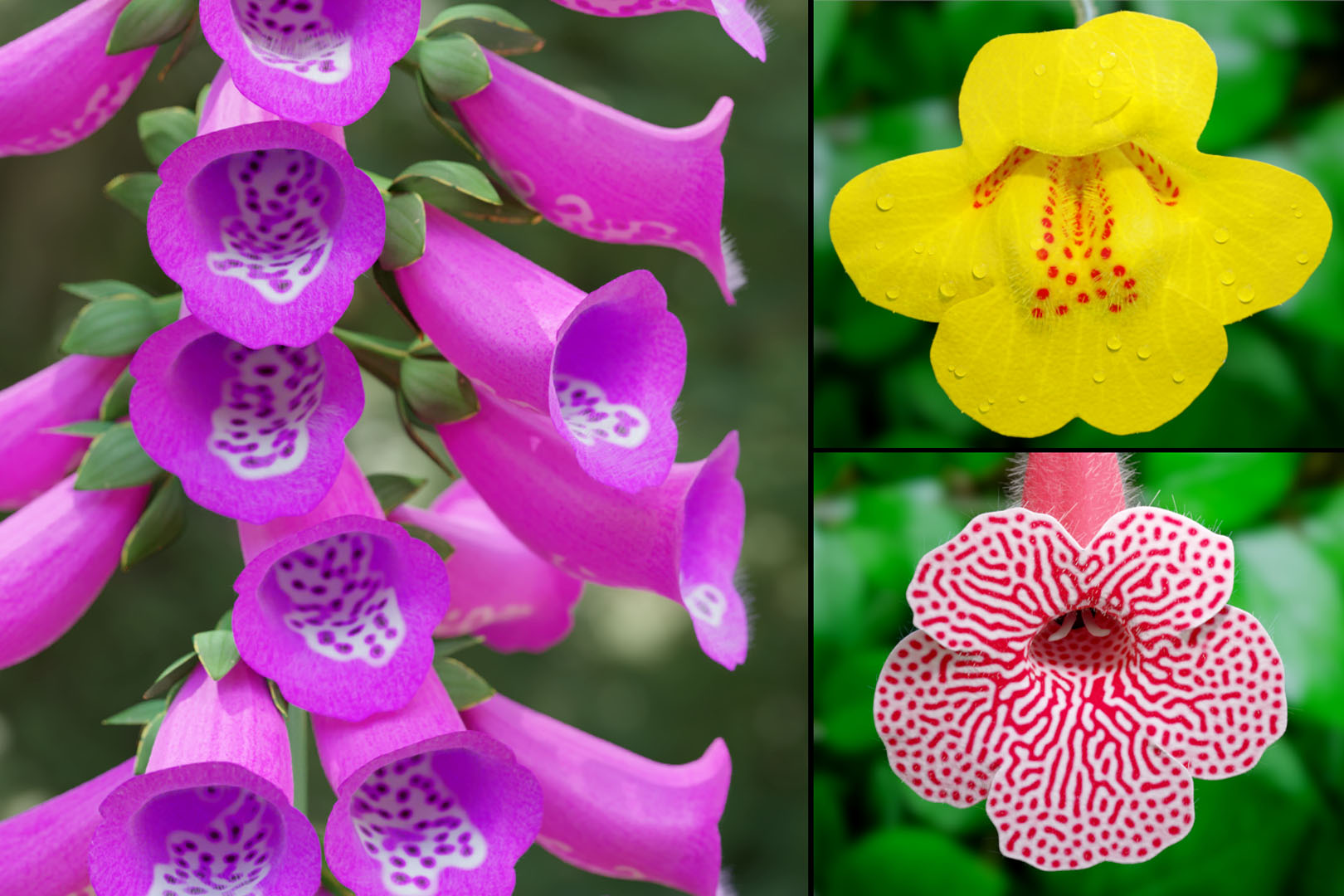
Although many simulation models of natural phenomena have been developed to date, little attention was given to a major contributor to the beauty of nature: the colorful patterns of flowers. We survey typical patterns and propose methods for simulating them inspired by the current understanding of the biology of floral patterning. The patterns are generated directly on geometric models of flowers, using different combinations of key mathematical models of morphogenesis: vascular patterning, positional information, reaction-diffusion, and random pattern generation. The integration of these models makes it possible to capture a wide range of the flower pigmentation patterns observed in nature.
References:
1. Chiara A Airoldi, Jordan Ferria, and Beverley J Glover. 2019. The cellular and genetic basis of structural colour in plants. Current Opinion in Plant Biology 47 (2019), 81–87.
2. Nick W Albert, Kevin M Davies, David H Lewis, Huaibi Zhang, Mirco Montefiori, Cyril Brendolise, Murray R Boase, Hanh Ngo, Paula E Jameson, and Kathy E Schwinn. 2014b. A conserved network of transcriptional activators and repressors regulates anthocyanin pigmentation in eudicots. The Plant Cell 26 (2014), 962–980.
3. Nick W Albert, Kevin M Davies, and Kathy E Schwinn. 2014a. Gene regulation networks generate diverse pigmentation patterns in plants. Plant Signaling & Behavior 9 (2014), e29526.
4. Mathieu Andreux, Emanuele Rodola, Mathieu Aubry, and Daniel Cremers. 2015. Anisotropic Laplace-Beltrami operators for shape analysis. In European Conference on Computer Vision 2014 Workshops, Part IV, Vol. Lecture Notes in Computer Science 8928. Springer, 299–312.
5. BlenderNation. 2021. Blender. (2021). https://www.blendernation.com
6. Mario Botsch, Leif Kobbelt, Mark Pauly, Pierre Alliez, and Bruno Lévy. 2010. Polygon Mesh Processing. CRC Press, Boca Raton.
7. Mikolaj Cieslak, Andrew Owens, and Przemyslaw Prusinkiewicz. 2021. Computational models of auxin-driven patterning in shoots. Cold Spring Harbor Perspectives in Biology (2021), a040097.
8. Robert L Cook. 1984. Shade trees, In Proceedings of ACM SIGGRAPH 1984. ACM SIGGRAPH Computer Graphics 1984, 223–231.
9. Keenan Crane, Fernando de Goes, Mathieu Desbrun, and Peter Schröder. 2013. Digital Geometry Processing with Discrete Exterior Calculus. In ACM SIGGRAPH 2013 Course Notes. ACM, New York, NY, USA, 1–126.
10. Kevin M Davies, Nick W Albert, and Kathy E Schwinn. 2012. From landing lights to mimicry: the molecular regulation of flower colouration and mechanisms for pigmentation patterning. Functional Plant Biology 39 (2012), 619–638.
11. Marcelo De Gomensoro Malheiros, Henrique Fensterseifer, and Marcelo Walter. 2020. The leopard never changes its spots: realistic pigmentation pattern formation by coupling tissue growth with reaction-diffusion. ACM Transactions on Graphics 39, 4 (2020), 63:1–13.
12. Mathieu Desbrun, Eva Kanso, and Yiying Tong. 2006. Discrete differential forms for computational modeling. In Discrete Differential Geometry: An Applied Introduction (SIGGRAPH 2006 Course Notes), Eitan Grinspun (Ed.). 287–324.
13. Samira M Descombes, Daljit S Dhillon, and Matthias Zwicker. 2015. Optimized CUDA-based PDE solver for reaction diffusion systems on arbitrary surfaces. In International Conference on Parallel Processing and Applied Mathematics. 526–536.
14. Baoqing Ding, Erin L Patterson, Srinidhi V Holalu, Jingjian Li, Grace A Johnson, Lauren E Stanley, Anna B Greenlee, Foen Peng, Harvey D Bradshaw Jr, Michael L Blinov, Benjamin K Blackman, and Yao-Wu Yuan. 2020. Two MYB proteins in a self-organizing activator-inhibitor system produce spotted pigmentation patterns. Current Biology 30 (2020), 802–814.
15. Lance Flavell. 2010. Beginning Blender: Open Source 3D Modeling, Animation, and Game Design. Apress / Springer, New York.
16. Deborah R Fowler, Hans Meinhardt, and Przemyslaw Prusinkiewicz. 1992. Modeling seashells. In Proceedings of ACM SIGGRAPH 1992. 379–387.
17. Atiyo Ghosh, Andre Leier, and Tatiana T Marquez-Lago. 2015. The spatial chemical Langevin equation and reaction diffusion master equations: moments and qualitative solutions. Theoretical Biology and Medical Modelling 12 (2015), 1–14.
18. Alfred Gierer and Hans Meinhardt. 1972. A theory of biological pattern formation. Kybernetik 12 (1972), 30–39.
19. Daniel T Gillespie. 2000. The chemical Langevin equation. Journal of Chemical Physics 113 (2000), 297–306.
20. Daniel T Gillespie. 2007. Stochastic simulation of chemical kinetics. Annual Review of Physical Chemistry 58 (2007), 35–55.
21. Peter Gray and Stephen K Scott. 1984. Autocatalytic reactions in the isothermal, continuous stirred tank reactor: Oscillations and instabilities in the system A+2B → 38; B → C. Chemical Engineering Science 39 (1984), 1087–1097.
22. Amelia A Green, J Richard Kennaway, Andrew I Hanna, J Andrew Bangham, and Enrico Coen. 2010. Genetic control of organ shape and tissue polarity. PLoS Biology 8 (2010), e1000537.
23. Jeremy B A Green and James Sharpe. 2015. Positional information and reaction-diffusion: Two big ideas in developmental biology combine. Development 142, 7 (2015), 1203–1211.
24. Erich Grotewold. 2006. The genetics and biochemistry of floral pigments. The Annual Revue of Plant Biology 57 (2006), 761–780.
25. Torsten Hädrich, Bedrich Benes, Oliver Deussen, and Sören Pirk. 2017. Interactive modeling and authoring of climbing plants. Computer Graphics Forum 36, 2 (2017), 49–61.
26. Pat Hanrahan and Paul Haeberli. 1990. Direct WYSIWYG painting and texturing on 3D shapes. ACM SIGGRAPH Computer Graphics 24 (1990), 215–223.
27. Takashi Ijiri, Shigeru Owada, Makoto Okabe, and Takeo Igarashi. 2005. Floral diagrams and inflorescences: interactive flower modeling using botanical structural constraints. In Proceedings of ACM SIGGRAPH 2005. 720–726.
28. Takashi Ijiri, Shin Yoshizawa, Hideo Yokota, and Takeo Igarashi. 2014. Flower modeling via X-ray computed tomography. ACM Transactions on Graphics 33 (2014), 48:1–10.
29. Wenzel Jakob. 2021. Instant Meshes. (2021). https://github.com/wjakob/instant-meshes
30. Wenzel Jakob, Marco Tarini, Daniele Panozzo, and Olga Sorkine-Hornung. 2015. Instant field-aligned meshes. ACM Transactions on Graphics 34 (2015), 189:1–15.
31. Radoslaw Karwowski and Przemyslaw Prusinkiewicz. 2003. Design and implementation of the L+C modeling language. In Electronic Notes in Theoretical Computer Science, Vol. 86. 134–152.
32. Richard Kennaway, Enrico Coen, Amelia Green, and Andrew Bangham. 2011. Generation of diverse biological forms through combinatorial interactions between tissue polarity and growth. PLoS Computational Biology 7 (2011), e1002071:1–22.
33. Shigeru Kondo and Rihito Asai. 1995. A reaction-diffusion wave on the skin of the marine angelfish Pomacanthus. Nature 376 (1995), 765–768.
34. Peter A Lawrence. 1992. The Making of a Fly: The Genetics of Animal Design. Blackwell Scientific Publications, Oxford.
35. David W Lee. 2010. Nature’s Palette: the Science of Plant Color. University of Chicago Press.
36. Kyoung J Lee, W D McCormick, Qi Ouyang, and Harry L Swinney. 1993. Pattern formation by interacting chemical fronts. Science 261 (1993), 192–194.
37. Ling Lu and Wenlin Song. 2014. Simulation research for petal color. Applied Mechanics and Materials 667 (2014), 237–241.
38. Claudio Mancinelli, Marco Livesu, and Enrico Puppo. 2019. A comparison of methods for gradient field estimation on simplicial meshes. Computers & Graphics 80 (2019), 37–50.
39. Hans Meinhardt. 1982. Models of Biological Pattern Formation. Academic Press, London.
40. Hans Meinhardt. 2009. The Algorithmic Beauty of Sea Shells. Fourth Edition. Springer, Dordrecht.
41. Mark Meyer, Mathieu Desbrun, Peter Schröder, and Alan H Barr. 2003. Discrete differential-geometry operators for triangulated 2-manifolds. In Visualization and Mathematics III, Polthier K. Hege HC. (Ed.). Springer, Berlin, 35–57.
42. Andrew Owens, Mikolaj Cieslak, Jeremy Hart, Regine Classen-Bockhoff, and Prze-myslaw Prusinkiewicz. 2016. Modeling dense inflorescences. ACM Transactions on Graphics 35, 4 (2016), 136:1–14.
43. John E Pearson. 1993. Complex patterns in a simple system. Science 261 (1993), 189–192.
44. Ken Perlin. 1985. An image synthesizer. ACM Siggraph Computer Graphics 19, 3 (1985), 287–296.
45. Przemyslaw Prusinkiewicz, Mark S Hammel, and Eric Mjolsness. 1993. Animation of plant development. Proceedings of ACM SIGGRAPH 1993 (1993), 351–360.
46. Przemyslaw Prusinkiewicz and Aristid Lindenmayer. 1990. The Algorithmic Beauty of Plants. Springer, New York. With contributions by James S. Hanan, F. David Fracchia, Deborah R. Fowler, Martin J. M. de Boer and Lynn Mercer.
47. Przemyslaw Prusinkiewicz, Lars Mündermann, Radoslaw Karwowski, and Brendan Lane. 2001. The use of positional information in the modeling of plants. In Proceedings of ACM SIGGRAPH 2001. 289–300.
48. Lee Ringham. 2020. Modelling Natural Phenomenon with Reaction-Diffusion. Master’s thesis. University of Calgary.
49. Lee Ringham, Przemyslaw Prusinkiewicz, and Robert Gniadecki. 2019. Skin patterning in psoriasis by spatial interactions between pathogenic cytokines. iScience 20 (2019), 546–553.
50. Sebastian Risi, Joel Lehman, David B D’Ambrosio, Ryan Hall, and Kenneth O Stanley. 2016. Petalz: Search-based procedural content generation for the casual gamer. IEEE Transactions on Computational Intelligence and AI in Games 8, 3 (2016), 244–255.
51. Yodthong Rodkaew, Suchada Siripant, Chidchanok Lursinsap, and Prabhas Chongstitvatana. 2002. An algorithm for generating vein images for realistic modeling of a leaf. In Proceedings of Computational Mathematics and Modeling 2002. 1–9.
52. Anne-Gaëlle Rolland-Lagan, J Andrew Bangham, and Enrico Coen. 2003. Growth dynamics underlying petal shape and asymmetry. Nature 422 (2003), 161–163.
53. Sheldon M Ross. 1997. Introduction to Probability Models. Academi Press.
54. Adam Runions, Martin Fuhrer, Brendan Lane, Pavol Federl, Anne-Gaëlle Rolland-Lagan, and Przemyslaw Prusinkiewicz. 2005. Modeling and visualization of leaf venation patterns. In Proceedings of ACM SIGGRAPH 2005. 702–711.
55. Adam Runions, Miltos Tsiantis, and Przemyslaw Prusinkiewicz. 2017. A common developmental program can produce diverse leaf shapes. New Phytologist 216 (2017), 401–418.
56. Tsvi Sachs. 2003. Collective specification of cellular development. BioEssays 25, 9 (2003), 897–903.
57. Allen R Sanderson, Robert M Kirby, Chris R Johnson, and Lingfa Yang. 2006. Advanced reaction-diffusion models for texture synthesis. Journal of Graphics Tools 11 (2006), 47–71.
58. Kathy Schwinn, Julien Venail, Yongjin Shang, Steve Mackay, Vibeke Alm, Eugenio Butelli, Ryan Oyama, Paul Bailey, Kevin Davies, and Cathie Martin. 2006. A small family of MYB-regulatory genes controls floral pigmentation intensity and patterning in the genus Antirrhinum. The Plant Cell 18 (2006), 831–851.
59. Yongjin Shang, Julien Venail, Steve Mackay, Paul C Bailey, Kathy E Schwinn, Paula E Jameson, Cathie R Martin, and Kevin M Davies. 2011. The molecular basis for venation patterning of pigmentation and its effect on pollinator attraction in flowers of Antirrhinum. New Phytologist 189 (2011), 602–615.
60. Karl Sims. 1991. Artificial evolution for computer graphics. In Proceedings of ACM SIGGRAPH 1991. 319–328.
61. Andrew Sugden. 1984. Longman Illustrated Dictionary of Botany. Longman, Burnt Mill.
62. Kazuma Suzuki, Tomohiro Suzuki, Takashi Nakatsuka, Hideo Dohra, Masumi Yamagishi, Kohei Matsuyama, and Hideyuki Matsuura. 2016. RNA-seq-based evaluation of bicolor tepal pigmentation in Asiatic hybrid lilies Lilium spp.). BMC Genomics 17 (2016), 1–19.
63. Alan Turing. 1952. The chemical basis of morphogenesis. Philosophical Transactions of the royal Society B 237 (1952), 37–72.
64. Greg Turk. 1991. Generating textures on arbitrary surfaces using reaction-diffusion. Proceedings of ACM SIGGRAPH 1991 (1991), 289–298.
65. Casper J van der Kooi, J Theo M Elzenga, Marten Staal, and Doekele G Stavenga. 2016. How to colour a flower: on the optical principles of flower coloration. Proceedings of the Royal Society B: Biological Sciences 283 (2016), 20160429:1–9.
66. Casper J van der Kooi, Bodo D Wilts, Hein L Leertouwer, Marten Staal, J Theo M Elzenga, and Doekele G Stavenga. 2014. Iridescent flowers? Contribution of surface structures to optical signaling. New Phytologist 203 (2014), 667–673.
67. John A Vastano, John E Pearson, W Horsthemke, and Harry L Swinney. 1987. Chemical pattern formation with equal diffusion coefficients. Physics Letters A 124 (1987), 320–324.
68. Pat Willmer. 2011. Pollination and Floral Ecology. Princeton University Press, Princeton.
69. Edwin B Wilson and Josiah W Gibbs. 1901. Vector Analysis: a text-book for the use of students of mathematics and physics founded upon the lectures of J. Willard Gibbs. Yale University Press, New Haven.
70. Andrew Witkin and Michael Kass. 1991. Reaction-diffusion textures. In Proceedings of ACM SIGGRAPH 1991. 299–308.
71. Lewis Wolpert. 1969. Positional information and the spatial pattern of cellular differentiation. Journal of Theoretical Biology 25, 1 (1969), 1–47.
72. Masumi Yamagishi. 2013. How genes paint lily flowers: Regulation of colouration and pigmentation patterning. Scientia Horticulturae 163 (2013), 27–36.
73. Lidia Yamamoto, Daniele Miorandi, Pierre Collet, and Wolfgang Banzhaf. 2011. Recovery properties of distributed cluster head election using reaction-diffusion. Swarm Intelligence 5 (2011), 225–255.
74. Yao-Wu Yuan. 2019. Monkeyflowers (Mimulus): new model for plant developmental genetics and evo-devo. New Phytologist 222 (2019), 694–700.
75. Yao-Wu Yuan, Alexandra B Rebocho, Janelle M Sagawa, Lauren EStanley, and Harvey D Bradshaw. 2016. Competition between anthocyanin and flavonol biosynthesis produces spatial pattern variation of floral pigments between Mimulus species. Proceedings of the National Academy of Sciences 113 (2016), 2448–2453.
76. Yao-Wu Yuan, Janelle M Sagawa, Laura Frost, James P Vela, and Harvey D Bradshaw Jr. 2014. Transcriptional control of floral anthocyanin pigmentation in monkeyflowers (Mimulus). New Phytologist 204 (2014), 1013–1027.
77. Chenxi Zhang, Mao Ye, Bo Fu, and Ruigang Yang. 2014. Data-driven flower petal modeling with botany priors. In Proceedings of the IEEE Conference on Computer Vision and Pattern Recognition. 636–643.
78. Ning Zhou, Weiming Dong, Jiaxin Wang, and Jean-Claude Paul. 2007. Modeling and visualization of flower color patterns. In 10th IEEE International Conference on Computer-Aided Design and Computer Graphics. 150–155.



