
“Talking to the Midnight Broadcast: Reviving 1990s City Memories With AI” by Yu and Xiang
Conference:
Type(s):
Title:
- Talking to the Midnight Broadcast: Reviving 1990s City Memories With AI
Session/Category Title:
- Culture and Computation
Presenter(s)/Author(s):
Moderator(s):
Abstract:
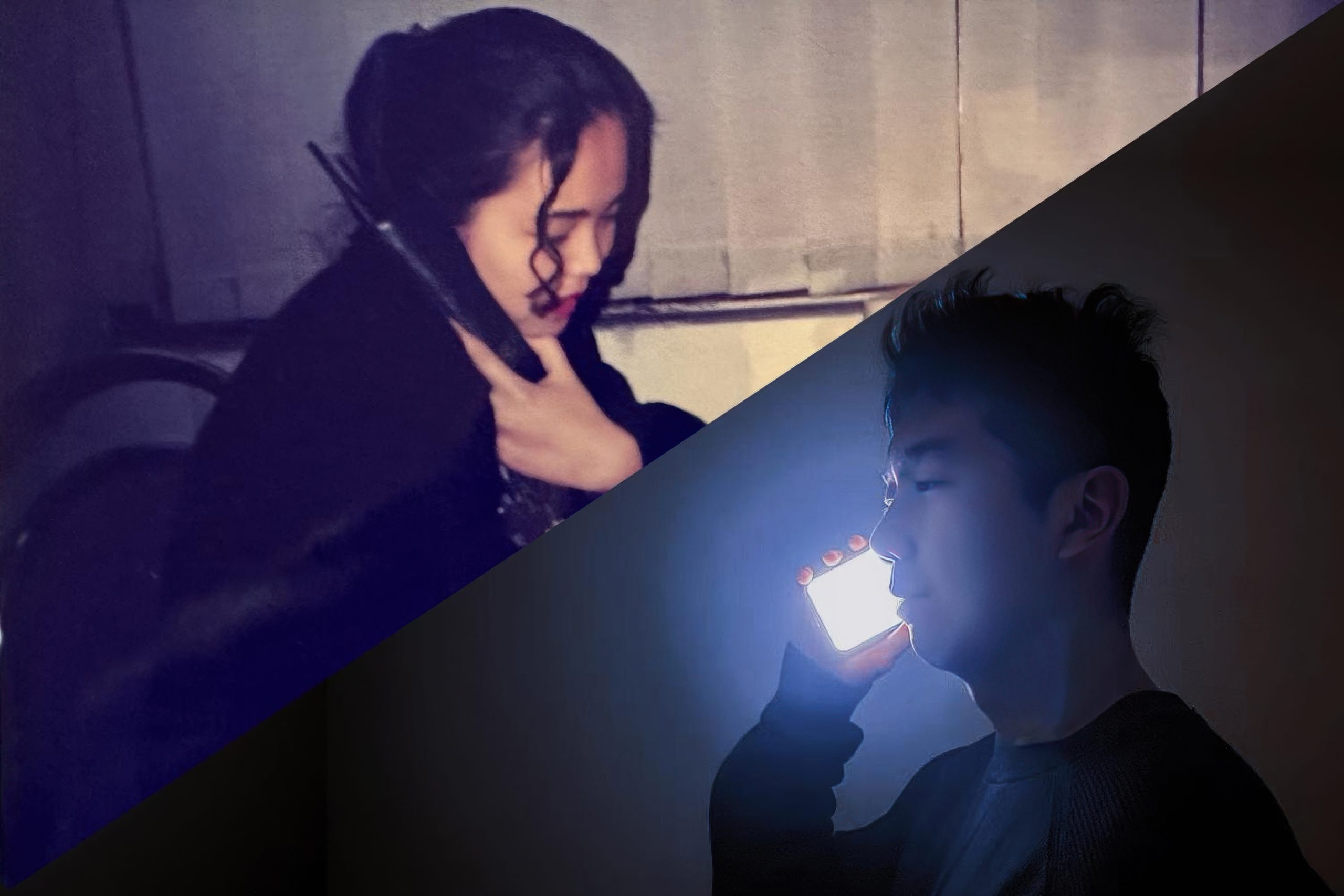
If you could dial into a midnight broadcast from 30 years ago, what would you say? This project explores the potential of artificial intelligence (AI) to reconstruct historical radio broadcasts, focusing on the cultural importance of preserving intangible heritage through sound. Shenzhen’s radio culture in the 1990s, influenced by Hong Kong’s openness to pop culture, shaped a generation of listeners. Inspired by the iconic 1990s Shenzhen midnight radio program, \textit{A Break at Service Station}, the project revives its host Sophie, a figure beloved for her soothing voice and empathetic presence, as a digital twin with authentic sounds and genuine memories through AI voice cloning and large language models (LLM). By integrating AI with city memories, the project reimagines a pivotal cultural moment while bridging generational distance—not through nostalgia, but through curiosity about a time of intimate, localized media. It reveals how AI can revive forgotten voices and reshape public memory in a rapidly evolving city.
References:
[1] A. A. Ada, S. H. Jørgensen, J. Fritsch, C. A. Le Dantec, A. Vallgårda, L. Jønsson, and S. F. Alaoui. 2024. Cultures of the AI Paralinguistic in Voice Cloning Tools. In Companion Publication of the 2024 ACM Designing Interactive Systems Conference. ACM, IT University of Copenhagen, Denmark, 249–252.
[2] Mario Antonius Birowo. 2011. Community radio and the empowerment of local culture in Indonesia. In Politics and the Media in Twenty-First Century Indonesia, Sen Hill (Ed.). Routledge, London, UK, 329–345. http://e-journal.uajy.ac.id/id/eprint/28779
[3] Adam Bluestein. 2022. Why Amazon’s ‘dead grandma’ Alexa is just the beginning for voice cloning. https://www.fastcompany.com/90775427/amazon-grandma-alexa-evolution-text-to-speech.
[4] Xiang Fan. 2024. 1994 Shenzhen Midnight: A Break at Service Station. https://www.ximalaya.com/album/80003993. Audio materials uploaded by the author to Ximalaya platform. Accessed: 2025-01-16.
[5] Karmen Franinovic and Yon Visell. 2004. Recycled Soundscapes. In Proceedings of the 5th Conference on Designing Interactive Systems: Processes, Practices, Methods, and Techniques(DIS ’04). Association for Computing Machinery, New York, NY, USA, 317.
[6] Henry Habib, Sarah McKay, and Peter Siegel. 2024. OpenAI API Cookbook: Build Intelligent Applications Including Chatbots, Virtual Assistants, and Content Generators (1st ed.). Packt Publishing, Limited, Birmingham, UK.
[7] Yu Jiang, Tian Wang, Hao Wang, Chen Gong, Qi Liu, Zhi Huang, Li Wang, and Jun Dang. 2024. Expressive Text-to-Speech with Contextual Background for ICAGC 2024. In 2024 IEEE 14th International Symposium on Chinese Spoken Language Processing (ISCSLP). IEEE, Beijing, China, 611–615.
[8] W. Lei. 2021. Sounds of a migrant city: radio representation and cultural citizenship in the case of Shenzhen, China. Citizenship Studies 25, 8 (2021), 1042–1057.
[9] MIT Open Documentary Lab. 2012. Vojo.co: A Tool for Amplifying Marginalized Voices. https://docubase.mit.edu/tools/vojo-co/. Accessed: 2025-01-16.
[10] OpenAI. 2025. OpenAI API Reference: Assistants. https://platform.openai.com/docs/api-reference/assistants. Accessed: 2025-01-16.
[11] P. Pataranutaporn, J. Leong, V. Danry, A. P. Lawson, P. Maes, and M. Sra. 2022. AI-Generated Virtual Instructors Based on Liked or Admired People Can Improve Motivation and Foster Positive Emotions for Learning. In 2022 IEEE Frontiers in Education Conference (FIE). IEEE, Uppsala, Sweden, 1–9.
[12] Denis Rothman. 2024. Transformers for Natural Language Processing and Computer Vision: Explore Generative AI and Large Language Models with Hugging Face, ChatGPT, GPT-4V, and DALL-E 3 (3rd ed.). Packt Publishing, Birmingham, UK.
[13] RVC-Boss. 2025. GPT-SoVITS: api.py. https://github.com/RVC-Boss/GPT-SoVITS/blob/main/api.py. Accessed: 2025-01-16.
[14] Karin Ryding, Vasiliki Tsaknaki, Stina Marie Hasse Jørgensen, and Jonas Fritsch. 2023. LYDSPOR: An Urban Sound Experience Weaving Together Past and Present Through Vibrating Bodies. In Proceedings of the 2023 CHI Conference on Human Factors in Computing Systems(CHI ’23). Association for Computing Machinery, New York, NY, USA, Article 184, 16 pages.
[15] SCÉRÉN. 2006. Hong Kong–Shenzhen: The Little Wall of China. Video, New York, NY: Filmakers Library.
[16] Xu Tan. 2023. Neural Text-to-Speech Synthesis (1st ed.). Springer Nature Singapore, Singapore.
[17] Da Wei David Wang. 2016. Urban Villages in the New China: Case of Shenzhen (1st ed.). Palgrave Macmillan US, New York, NY, USA.
[18] Hua Xu. 1998. Talk Radio in Urban China: Implications for the Public Sphere. In Communication and Culture: China and the World Entering the 21st Century, D. Ray Heisey and Wenxiang Gong (Eds.). Brill, Leiden, Netherlands, 329–345.
[19] Jinlong Xue, Yayue Deng, Yingming Gao, and Ya Li. 2024. Retrieval Augmented Generation in Prompt-based Text-to-Speech Synthesis with Context-Aware Contrastive Language-Audio Pretraining. https://arxiv.org/abs/2406.03714. arxiv:https://arXiv.org/abs/2406.03714Interspeech 2024 (accepted).



